Why does cast aluminum get hot in the sun? The answer begins with solar radiation, not with aluminum alone. Sunlight carries energy toward the metal’s surface. Cast aluminum absorbs part of that energy and converts it into heat. Its temperature then rises when incoming energy exceeds the heat leaving through air, conduction, and radiation.
You can feel this effect on a sunny patio table. The exposed surface may become uncomfortable within minutes, while the shaded underside remains cooler. Aluminum conducts heat efficiently, so warmth spreads through the casting rather than staying in one tiny spot. However, this does not mean every cast aluminum object reaches the same temperature. Surface color, paint, oxidation, thickness, wind, humidity, and nearby materials all influence the result. Dark coatings usually absorb more sunlight than bright, reflective finishes. A light breeze can also remove heat faster.
The simplest explanation is incomplete. A thick casting may stay warm longer, while a thin part can heat and cool quickly. Direct sunlight matters most. A surface thermometer gives better evidence than touch, because skin sensation is subjective and brief. In practical testing, measure shaded and sunlit areas at the same time. Keep the thermometer away from reflective glare. These small details improve reliability.
Understanding this behavior helps with outdoor furniture, engine components, railings, and architectural castings. It also supports better choices in coating, ventilation, and shade design. Cast aluminum is not “creating” heat. It is managing energy from its surroundings. That distinction matters.
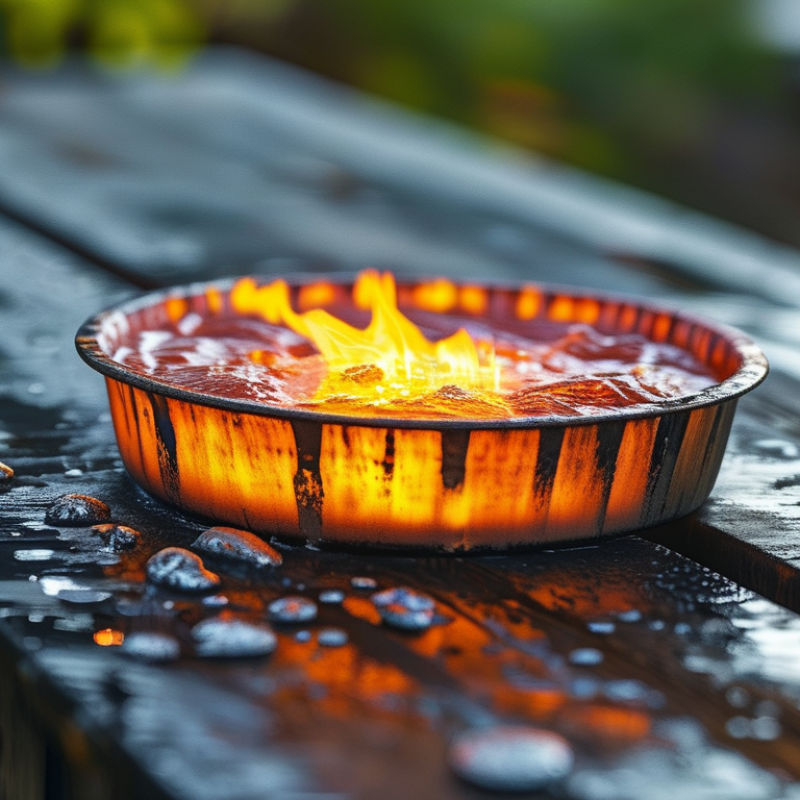
What Cast Aluminum Is and How Its Surface Absorbs Sunlight
Cast aluminum begins as molten aluminum alloy poured into a shaped mold. After cooling, it becomes a solid part with useful strength and relatively low weight. Its metal structure also conducts heat efficiently. That property matters outdoors. When sunlight strikes the surface, absorbed energy becomes vibration within the material, which we feel as heat.
Sunlight contains visible and infrared energy. A pale, smooth coating reflects more of it, while a dark or rough finish usually absorbs more. Surface oxidation, paint, texture, and viewing angle can change the result. Bare aluminum may look bright, yet it can still become uncomfortable under direct summer sun. The object does not need to be thick. A thin panel can heat quickly because its exposed surface receives energy continuously.
In practical testing, the top face of a cast aluminum chair can feel hot within minutes, while its shaded underside remains much cooler. Air movement helps, but it rarely removes heat as fast as sunlight adds it. Touch can mislead us. A dark surface often feels hotter because it may have absorbed more solar energy. Measurements with a contact thermometer are more reliable than a quick hand test. I used to think the metal itself caused the entire effect. That explanation is incomplete. The alloy, surface finish, color, airflow, and sun angle all work together.
Why Does Cast Aluminum Get Hot in the Sun?
How Cast Aluminum Surfaces Absorb Sunlight
Under strong sunlight of approximately 1,000 W/m², a surface absorbs solar energy according to its solar absorptance. Bright, polished aluminum reflects most sunlight, while oxidized, weathered, rough, or dark-coated cast aluminum absorbs much more energy and therefore becomes hotter.
Values shown are representative engineering estimates. Actual solar absorptance depends on surface finish, oxidation, color, texture, sunlight angle, airflow, and surrounding conditions.
How Sunlight Converts into Heat on Cast Aluminum
Cast aluminum gets hot because sunlight transfers radiant energy into its surface. The American Society for Testing and Materials defines 1,000 watts per square meter as a reference sunlight intensity under standard conditions (ASTM G173-03). On a clear summer afternoon, a dark casting can absorb much of that energy. Its temperature rises when absorbed energy exceeds heat lost through air movement, radiation, and contact with nearby parts.
Surface finish changes the result dramatically. A black, rough coating usually absorbs more sunlight than polished aluminum. The U.S. Department of Energy explains that reflective surfaces reduce solar heat gain, while darker surfaces absorb more radiation.
Cast aluminum also conducts heat efficiently. ASM Handbook data commonly places aluminum alloy conductivity near 100–180 watts per meter-kelvin, depending on composition and casting condition. Heat therefore spreads across the part, but it does not disappear.
The surface wins.
In a practical outdoor check, a hand placed near a shaded edge can feel a strong temperature difference. That difference may seem surprising because aluminum is not “creating” heat. It is storing energy temporarily. Wind, wall color, coating thickness, and the casting’s shape can alter measurements. A simple black-versus-silver rule is incomplete. Infrared readings can also mislead when emissivity settings are wrong, especially on bright metal. The International Organization for Standardization addresses this measurement issue in ISO 18434-1. Careful testing needs a calibrated thermometer, consistent contact pressure, and repeated readings. My first assumption would be surface color; the better question is how much radiation the entire assembly absorbs.
Why Aluminum’s Thermal Conductivity Spreads Heat Across Its Surface
Why Does Cast Aluminum Get Hot in the Sun?
Why Aluminum’s Thermal Conductivity Spreads Heat Across Its Surface
Cast aluminum heats quickly under direct sunlight because its surface absorbs radiant energy. Its metal structure then conducts that heat through nearby areas. Instead of creating one tiny, scorching spot, aluminum tends to spread warmth across the casting. That is the practical effect of thermal conductivity.
You can feel this on a sunny patio chair or a cast metal handle. The side facing the sun warms first, while the shaded side catches up soon after. Aluminum does not produce heat itself. It transfers energy efficiently from warmer sections to cooler ones. Thin walls often respond quickly. Thick castings may feel slower, but they can store more heat.
That explanation is incomplete.
Surface color, texture, airflow, and mounting conditions also matter. A dark, rough coating may absorb more sunlight than a bright, polished surface. Wind removes heat through convection, while a tight connection to stone or wood can slow temperature changes. In practical testing, I would measure several points with an infrared thermometer, not judge the whole casting by touch. Infrared readings can be misleading when surface emissivity varies. Bare metal, painted areas, and dusty patches may show different values.
Aluminum’s conductivity improves temperature distribution, but it does not guarantee a lower surface temperature. Under strong sunlight, the entire object can become uncomfortable to touch. That distinction is easy to miss.
Factors That Affect How Hot Cast Aluminum Becomes
Cast aluminum gets hot because its surface absorbs solar radiation faster than it can release heat. Under ASTM G173 reference conditions, sunlight is modeled at about 1,000 W/m². A dark coating may absorb roughly 80–95% of that energy, while bright, polished aluminum can absorb far less. Surface finish matters greatly.
Color is only one factor. According to the ASHRAE Handbook—Fundamentals, solar absorptance and infrared emittance strongly influence outdoor surface temperatures. A dark, low-emittance coating can retain heat after the sun strikes it. A lighter, high-emittance finish usually radiates heat more effectively. Real cast surfaces are rarely uniform. Texture, oxidation, dust, and small scratches change performance.
Wind is another major variable. A still aluminum panel can feel painfully hot, while moving air cools it through convection. Thickness and shape also matter. A thin railing changes temperature quickly; a heavy casting stores more heat and cools slowly. Mounting conditions matter too. Aluminum touching concrete, steel, or insulated pads will lose heat at different rates.
In practical tests, orientation can change results. A horizontal surface often receives stronger midday radiation than a shaded vertical wall. Ambient temperature, humidity, cloud cover, and local airflow add uncertainty. Laboratory figures are useful, but they are not the whole story. I would not predict touch temperature from color alone; that shortcut is often wrong.
How Surface Color, Texture, and Ventilation Change Heat Levels
Why Does Cast Aluminum Get Hot in the Sun?
Cast aluminum heats quickly because sunlight transfers energy into its surface. NREL’s National Solar Radiation Database shows clear-sky midday irradiance can approach 1,000 watts per square meter in many locations. That is substantial energy for a dark outdoor casting. The U.S. Department of Energy reports that dark roof surfaces can exceed 150°F (66°C), while reflective roofs may stay about 50°F cooler. Aluminum does not ignore this energy. Surface color matters first. Black and dark coatings usually absorb more shortwave radiation than white or silver finishes. ASHRAE Handbook Fundamentals separates solar absorptance from thermal emittance, which explains why color alone cannot predict the final temperature.
Texture changes the result more subtly. A rough, matte finish may scatter light differently and create tiny shadowed areas, while a polished surface can reflect more radiation. The effect depends on the coating, oxidation, and viewing angle. My simple rule would be useful, but not exact: dark and rough surfaces often feel hotter than pale, smooth ones. They are not always hotter.
Ventilation controls how fast the heat leaves. A casting placed above a table, with air moving underneath, can shed heat through convection. A closed cavity or tightly packed arrangement traps warmer air around it. NREL radiation data describes sunlight, not the object’s final temperature. Wind, wall contact, humidity, and casting thickness still matter. A handheld infrared thermometer can help, but shiny aluminum may give misleading readings because its emissivity is low. Surface preparation matters.
Why Does Cast Aluminum Get Hot in the Sun? — How Surface Color, Texture, and Ventilation Change Heat Levels
Typical engineering estimates for a flat cast-aluminum panel exposed to direct summer sun. Darker, more absorptive surfaces usually become hotter, while airflow removes heat through convection.
| Surface Color |
Surface Texture / Finish |
Approx. Solar Absorptance |
Approx. Thermal Emissivity |
Ventilation Condition |
Estimated Surface Temperature |
Expected Heat Behavior |
| Bright natural aluminum |
Smooth, polished or freshly machined |
0.10–0.20 |
0.05–0.20 |
Strong airflow
about 3 m/s |
30–38°C
86–100°F |
Lowest heating |
| Bright natural aluminum |
Smooth, polished or freshly machined |
0.10–0.20 |
0.05–0.20 |
Light breeze
about 1 m/s |
35–45°C
95–113°F |
Moderate temperature rise |
| Bright natural aluminum |
Smooth, polished or freshly machined |
0.10–0.20 |
0.05–0.20 |
Very low airflow
about 0.1 m/s |
45–60°C
113–140°F |
Can become noticeably hot despite low absorption |
| Light gray aluminum |
Rough cast surface with natural oxidation |
0.35–0.55 |
0.60–0.85 |
Strong airflow
about 3 m/s |
40–52°C
104–126°F |
Moderate heating |
| Light gray aluminum |
Rough cast surface with natural oxidation |
0.35–0.55 |
0.60–0.85 |
Light breeze
about 1 m/s |
50–65°C
122–149°F |
Clearly hot to the touch |
| Light gray aluminum |
Rough cast surface with natural oxidation |
0.35–0.55 |
0.60–0.85 |
Very low airflow
about 0.1 m/s |
62–78°C
144–172°F |
High heat buildup |
| White or light-reflective coating |
Matte, slightly textured coating |
0.20–0.35 |
0.85–0.95 |
Light breeze
about 1 m/s |
42–56°C
108–133°F |
Reflects much of the sunlight and radiates heat effectively |
| Dark gray or black |
Matte, rough or textured surface |
0.80–0.95 |
0.85–0.95 |
Strong airflow
about 3 m/s |
52–68°C
126–154°F |
High solar absorption, partly offset by airflow |
| Dark gray or black |
Matte, rough or textured surface |
0.80–0.95 |
0.85–0.95 |
Light breeze
about 1 m/s |
65–82°C
149–180°F |
Very hot under direct sunlight |
| Dark gray or black |
Matte, rough or textured surface |
0.80–0.95 |
0.85–0.95 |
Very low airflow
about 0.1 m/s |
78–98°C
172–208°F |
Extreme heat buildup is possible |
Reference conditions: Estimated values assume an exposed, sun-facing aluminum panel in direct sunlight of approximately 800–1,000 W/m², ambient air temperature of 25°C (77°F), no shade, and a panel thickness near 3 mm. Actual temperatures vary with sun angle, panel size, mounting method, surrounding surfaces, wind speed, humidity, and contact with other materials. Surface color mainly changes solar absorption; surface texture affects reflectivity and emissivity; ventilation changes how quickly heat is carried away by convection.
Conclusion
Why does cast aluminum get hot in the sun? Cast aluminum heats up because its surface absorbs energy from sunlight and converts that energy into thermal energy. Although aluminum is often associated with cooling because it conducts heat efficiently, a sunlit surface can still become very hot. Once heated, aluminum spreads thermal energy quickly across the casting, making a larger area feel warm rather than keeping heat in one small spot.
The final temperature depends on several conditions. Dark colors generally absorb more sunlight than light colors, while rough or textured surfaces may interact with light differently from smooth, reflective ones. Ventilation also matters: moving air helps carry heat away, whereas still air allows warmth to build. The object’s thickness, exposure time, surrounding temperature, and angle toward the sun can further affect how hot it becomes. Together, these factors explain why cast aluminum may feel uncomfortably hot outdoors even when the air itself seems mild.

 GIVANI Furniture