A garage is convenient, but it is not the only way to protect patio furniture through rain, snow, and long periods outdoors. NOAA’s 2023 U.S. Billion-Dollar Weather and Climate Disasters report recorded 28 separate disasters with losses exceeding $1 billion each. That figure does not measure damage to patio sets, but it shows how often severe weather can test outdoor spaces. Moisture also matters: the U.S. Environmental Protection Agency explains that mold can grow when materials stay damp. A cover alone may trap moisture if furniture is stored before it dries.
So, How to store patio furniture without a garage? Start by matching the storage method to each material and your available space. Clean and dry cushions before placing them in breathable storage bags. Stack compatible chairs carefully, and keep table legs away from wet soil. A resin deck box, covered porch, shed, or weather-resistant furniture cover may help, depending on your climate and the manufacturer’s care instructions. Small details count. Leave airflow beneath covers, and check stored items after storms.
There is no perfect setup for every home. A balcony has different limits than a side yard, and even a good cover can shift in strong wind. This guide shares seven practical ways to reduce avoidable wear, protect finishes, and make seasonal storage less stressful. The aim is simple: keep furniture cleaner and drier, without pretending that outdoor storage can eliminate every risk.
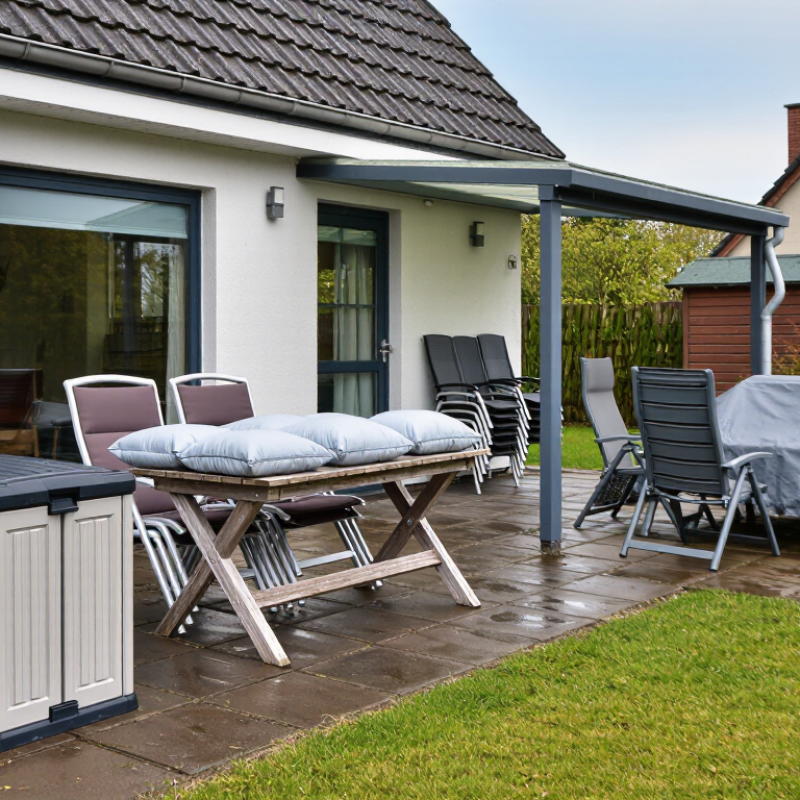
Tip: Match protection to each material. Aluminum frames usually need little more than cleaning and a dry cover, while steel can rust where paint is chipped. Check joints and touch up damaged finishes before wet weather. Wood benefits from airflow; avoid sealing it inside plastic, which can trap moisture. Woven resin may handle rain, but its cushions often cannot.
Tip: Think about the season and your local conditions. Before winter, brush dirt from frames and let every cushion dry fully. Damp fabric grows musty. I still find this easy to overlook. In windy areas, secure breathable covers so they do not flap against corners. During hot, sunny months, shade helps limit fading and heat damage, especially to fabric and plastic parts.
Tip: Choose storage based on what you have, not an ideal garage. A dry shed, covered porch, or elevated spot beneath an overhang may work if air can circulate. Keep furniture off bare soil with blocks or a raised platform, and leave a little space between pieces. I once covered a chair before it was fully dry; the trapped smell lingered longer than expected. Check stored furniture after heavy rain or a temperature change, since a cover can shift or collect water.
Assess furniture materials and seasonal storage needs before choosing a cover or storage spot.
Higher scores indicate greater need for dry, covered storage. These relative ratings are practical guidance, not laboratory measurements. Store cushions indoors; keep natural wicker dry; protect steel from moisture; and clean and cover teak, aluminum, and resin wicker before long periods of poor weather.
Tip: Clean every piece before it goes into storage. Brush off loose soil, leaves, and cobwebs, especially beneath seats and around joints. Use mild soap and water on most hard surfaces, then follow the care instructions for fabric or natural materials. A soft brush can lift grime from woven furniture without pulling at the strands. Rinse away soap residue. It can attract dirt later.
Tip: Let each item dry completely. Wipe metal frames and tabletops with a clean cloth, then check seams, screw holes, and the undersides of chairs. These spots can hold water even when the surface looks dry. Leave cushions open in a breezy, shaded area, turning them once. Sunlight may fade some fabrics. I once packed a cushion that felt dry on top but was damp along its piping. It needed airing again.
Tip: Check before wrapping or stacking. Feel along corners and folds for cool, damp patches, and give anything questionable more drying time. A fan can help in a still room. Avoid sealing furniture in plastic while moisture remains trapped inside. That small delay is worth it. When pieces are fully dry, cover them with breathable material and keep them off a damp floor.
Tip: Choose storage by checking moisture, airflow, and access. A dry spare room or basement can protect cushions and lightweight furniture, but only if the space stays dry. Feel the floor after rain, and look for musty odors or water marks. Leave a little room around stored pieces so air can circulate. Damp corners are trouble.
Tip: If indoor space is limited, use a sheltered outdoor spot, such as a covered porch or a well-drained shed. Raise furniture on stable blocks to keep legs away from wet ground. Choose a breathable cover that sheds rain without trapping condensation. Tight plastic can seem convenient, but it may hold moisture against wood or metal.
Tip: Match the area to the furniture. Bring cushions indoors, especially before long wet spells, and store them only when fully dry. Wipe dirt from frames before covering them; grit can scratch surfaces when wind shifts the cover. Check the spot every few weeks for pests, dampness, or pooling water. No location is perfect, so adjust when the season changes.
Tip: Choose covers made for outdoor use, but do not assume waterproof means better. A breathable, water-resistant cover helps shed rain while letting some moisture escape. Fit it over clean, dry furniture, leaving a little space beneath the edges for airflow. Tight plastic can trap condensation against wood or metal. Let it breathe.
Tip: Add a weather barrier under the cover when furniture sits on damp ground. Raise chair legs on pavers or sturdy risers, and keep cushions in a dry indoor spot if possible. For a table, cover the top without wrapping every leg tightly. Secure loose cover corners with soft straps, not sharp wire. Wind matters.
Tip: Check the setup after heavy rain or a windy night. Lift a cover and feel the seat and frame; if either feels damp, uncover it until fully dry. I used to think one careful covering would last all season. It may not. Leaves, pooled water, and a shifted cover can quietly cause stains or mildew, so a quick inspection every few weeks is worthwhile.
When patio furniture has to stay outdoors, arrange it so you can reach every piece without shifting a heavy stack. Nest matching chairs only when their frames fit securely, and keep table legs from pressing against cushions. Store cushions in a dry, lidded container, but let them air out first if they feel damp. A little space between items helps air move and makes small problems easier to spot.
Raise furniture off soil and standing water with stable, weather-resistant blocks. Even a covered patio can collect rain near the edges, and wooden legs can absorb moisture from a wet floor. Keep metal feet level so chairs do not wobble. Use a breathable cover that rests loosely over the furniture; tightly wrapped plastic can trap condensation. It is tempting to cover everything and forget it. That can backfire.
Check stored items every few weeks, especially after heavy rain or a windy spell. Look for damp fabric, loose fasteners, rust spots, and leaves caught beneath the cover. Open the container and air out cushions if they smell musty. Move furniture slightly to inspect the floor underneath, too. I might miss a check during a busy month, so a reminder on the calendar helps. Adjust the setup when you find a problem rather than waiting for the season to end.
| Tip | What to Do | Suitable for | Helpful Check |
|---|---|---|---|
| 1. Clean and dry everything | Brush off debris, wash surfaces with mild soapy water, and let each item dry fully before covering or storing it. | Furniture frames, cushions, and removable accessories | Check seams, joints, and undersides for trapped moisture. |
| 2. Store cushions indoors | Keep cushions in a dry indoor closet, shed, or weatherproof storage chest. Avoid sealing damp cushions in plastic. | Fabric cushions and pillows | Make sure cushions are completely dry before storing. |
| 3. Choose a sheltered location | Use a covered porch, shed, or a spot beside a wall that is protected from direct rain and strong wind. | Furniture that must remain outdoors | Check that roof runoff does not fall onto the stored items. |
| 4. Elevate furniture off the ground | Place furniture on a stable, level surface such as dry blocks or a raised platform to reduce contact with puddles and damp ground. | Tables, chairs, and storage containers | Confirm the supports are steady and do not wobble. |
| 5. Arrange items for airflow | Leave small gaps between pieces, avoid tight stacks, and do not press covered furniture against a wall. | Grouped or stacked furniture | Look for damp or stale-smelling areas where air may not circulate. |
| 6. Use breathable, secure covers | Choose a cover that fits without dragging on the ground. Secure it against wind while allowing some air to circulate. | Outdoor furniture left exposed to the weather | After rain, check for pooled water and adjust the cover if needed. |
| 7. Check stored items regularly | Inspect the storage area and furniture periodically, especially after heavy rain, snow, or strong winds. | All stored patio furniture and accessories | Look for moisture, loose covers, debris, or signs of pests. |
Clean aluminum frames and keep them dry. Check steel for chipped paint, where rust may start. Wood needs airflow, not sealed plastic. Woven resin may handle rain, but cushions need separate protection.
Damp fabric can develop a musty smell. Check seams and piping, not just the surface. I have missed damp spots before. Give cushions more time if they feel cool or moist.
Brush away soil, leaves, and cobwebs, especially beneath seats and around joints. Mild soap and water suit many hard surfaces. Rinse well; leftover soap can attract dirt.
Feel corners, folds, screw holes, and chair undersides. These spots can hold water after the surface looks dry. Still unsure? Wait longer or use a fan in a still room.
Choose a breathable, water-resistant outdoor cover. It can shed rain while allowing some moisture to escape. Tight plastic may trap condensation. Let it breathe.
A dry shed, covered porch, or sheltered spot beneath an overhang may work. Keep pieces off bare soil using blocks or a raised platform. Leave space between them for airflow.
Use soft straps to hold loose corners. Avoid sharp wire, which can damage the cover or furniture. Check after windy nights; covers can shift or flap against corners.
Inspect it every few weeks and after heavy rain or temperature changes. Look for pooled water, leaves, and damp patches. One careful covering may not last all season.
How to store patio furniture without a garage? Start by checking what each piece is made of and how much protection it needs during the off-season. Clean away dirt, leaves, and residue, then let every item dry completely to help prevent moisture damage. Choose a storage spot that suits your space, such as a shed, basement, covered porch, or another sheltered area. If furniture must remain outdoors, place it where it is protected from harsh weather as much as possible.
Use well-fitted covers or other weather barriers, while allowing enough airflow to reduce trapped moisture. Arrange furniture carefully to save space without placing excessive weight on delicate pieces. Elevate items from damp floors or soil, and keep cushions and other soft furnishings in a dry location. Check stored furniture periodically for moisture, pests, or shifting covers, and make small adjustments as needed to keep everything clean and ready for the next season.

GIVANI Furniture