Choosing the right rug can make an outdoor dining area feel settled, rather than squeezed onto the patio. But the table alone does not determine the size. Chairs need room to slide back without catching on the rug’s edge, and guests need a stable surface underfoot. A common starting point is to leave about 24 to 30 inches of rug beyond each side of the table. The exact fit depends on chair depth and the space available.
Outdoor-living designer Jordan Lee offers this practical rule: “Measure the table with the chairs pulled out, not just the tabletop.” That simple check can prevent a familiar mistake: the front chair legs sit on the rug, while the back legs scrape across bare decking. Not ideal. For a six-seat set, a 9-by-12-foot rug may work, but always compare its dimensions with your fully extended chair layout before buying.
So, What size rug do I need for an outdoor dining set? Start by pulling every chair out as if someone were about to sit down. Measure the full footprint, then look for a rug that keeps all chair legs on its surface during normal use. Leave breathing room around the arrangement when the patio allows it. If the area is tight, prioritize smooth chair movement over a perfectly centered look. It is a compromise worth noticing. This guide will explain how to measure round and rectangular tables, choose a practical rug shape, and account for outdoor materials, drainage, and exposed edges.
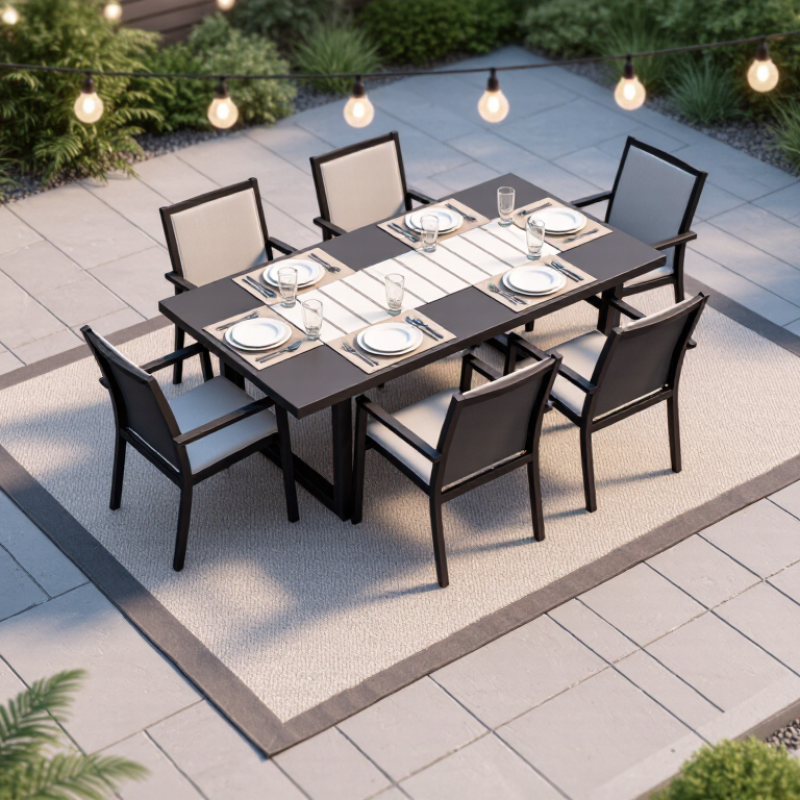
To choose a rug for an outdoor dining set, measure the space the chairs need, not just the tabletop. Place each chair where people would normally sit, then pull it back as if someone were standing up. Measure from the outer edge of one chair to the opposite edge. Do this in both directions. It takes a minute.
Add about 24 to 30 inches to each side of those measurements. This gives chairs room to slide without catching on the rug’s edge. For a rectangular set, add the clearance to both the length and width. For a round table, measure the widest chair-to-chair span, then add roughly 48 to 60 inches to the diameter. These are useful starting points, not strict rules; chair shapes and patio layouts vary.
Use painter’s tape or a garden hose to mark the proposed rug outline on the ground. Pull the chairs in and out, and check nearby doors, planters, and walkways. If a chair leg lands on the border when pulled back, the rug may feel cramped. I’ve found this check more revealing than trusting a catalog diagram. Still, outdoor spaces can be uneven, and tape won’t show how a thick edge feels beneath a chair.
For an outdoor dining rug, measure chair clearance with the chairs pulled out, not tucked beneath the table. Aim for 24 inches of rug beyond each tabletop edge; 30 inches gives bulky chairs more room. That extra surface helps keep rear legs from catching the rug edge as guests sit down. A quick test: pull each chair back as if someone were standing up. If its back legs slip off, size up. Measure twice. Patio layouts are rarely perfectly square.
The National Kitchen & Bath Association’s Kitchen Planning Guidelines use 36 inches as a minimum walkway width. Treat that as a useful target for the route behind occupied dining chairs, separate from the rug’s overhang. On a narrow deck, a larger rug may cover the walking path, so check doors and traffic flow before buying. For example, a 40-by-72-inch table with 24-inch clearance on every side needs roughly an 88-by-120-inch rug. Allow more for wide armchairs. The exact fit can still feel off; chair shape and uneven paving change how the space works.
For a rectangular outdoor table, measure the tabletop and add 48 to 60 inches to both its length and width. This allows roughly 24 to 30 inches of rug beyond each edge, so chairs stay on the rug when guests pull them out. A 72-inch-long table, for example, often needs a rug about 10 feet long. Check the chair movement, not just the table footprint. That detail matters.
For a round table, choose a round rug when the space allows; match the rug’s diameter to the tabletop diameter plus 48 to 60 inches. A 48-inch table pairs comfortably with a rug around 8½ to 9 feet across. Square tables usually look balanced on square rugs, sized with the same extra border on every side. Oval tables can sit well on oval or rectangular rugs, provided chair legs do not catch the edge. Measure with chairs pulled back. Outdoor layouts rarely match perfect diagrams, and a little extra rug can feel wasteful in a tight patio. Still, a rug that is too small may leave chair legs wobbling on uneven paving. Recheck clearances before buying.
Recommended rug dimensions for common outdoor table shapes
How to use this chart: A rug that extends about 24 inches beyond each table edge gives chairs room to move while staying on the rug. For round tables, the two bars show the same rug diameter. Sizes are practical recommendations based on common table dimensions; check your chair depth and available patio space before buying.
What Size Rug for an Outdoor Dining Set in 2026?
Matching Rug Dimensions to Your Patio Layout
Start with the patio, not the table. Measure the usable floor area, then mark door swings, steps, drains, and the path people take around the dining set. The National Association of Home Builders’ 2024 What Home Buyers Really Want report found that 86% of buyers considered a patio essential or desirable. That interest makes a comfortable, workable layout worth planning carefully.
Pull each chair out as if someone were sitting down, then measure from the outer chair backs. Choose a rug that keeps all four chair legs on it in that position; about 24 inches of extra rug beyond each table edge is a practical starting point. For a narrow patio, a smaller rug may preserve a clear walkway, even if the chairs sometimes cross its edge. Small patios need restraint. I still find it easy to underestimate chair movement.
Tips: Use painter’s tape to outline the proposed rug size on the paving. Walk around the taped shape and pull out every chair. Leave doors and drainage clear. If the layout feels cramped, rethink the rug shape before buying.
For an outdoor dining set, size the rug around moving chairs, not just the table. A practical design rule is to leave about 24 inches of rug beyond each table edge, so chairs stay on the surface when pulled back. Measure with chairs in their usual position; wide arms or angled legs may need more room. A tight fit looks neat in a photo. It can feel awkward at dinner.
Outdoor exposure matters. ASTM G154 describes a standardized method for testing nonmetallic materials under fluorescent UV and moisture exposure; it does not predict any rug’s exact lifespan. Choose materials labeled for outdoor use, and check care instructions for sun, rain, and drying. A low-pile weave is easier to move chairs across, but it may still trap grit. Lift the edges occasionally and inspect the surface. I’d also leave a little extra clearance near wet steps—measurements on a dry patio can be misleading.
Pull each chair back as if someone were standing up. Measure the widest chair-to-chair span in both directions.
Leave about 24 to 30 inches beyond each table edge. That gives chair legs room to move.
A rug around 10 feet long is a useful starting point. Check the width too, with chairs pulled back.
A round rug about 8½ to 9 feet across often works well. Tight patios may need a different shape.
Mark the outline with painter’s tape or a garden hose. Pull chairs in and out, then check doors and walkways.
It often looks balanced. Round tables suit round rugs, while long tables usually pair well with rectangular rugs. Not a strict rule.
Leave space near wet steps and allow rainwater to drain around the rug. Dry-patio measurements can be misleading.
Usually, yes. It can still trap grit, so lift the edges and inspect underneath. I sometimes forget that part.
What size rug do I need for an outdoor dining set? Start by measuring the table and the chairs, then choose a rug that leaves enough room for chairs to slide back without catching the edges. A practical guideline is to allow about 24 to 30 inches of extra rug space beyond each side of the table, though larger chairs or a more generous layout may need more. Measure with the chairs pulled out, not tucked beneath the table, so the rug can accommodate everyday use.
Match the rug’s shape to the table when possible: a rectangular rug suits a rectangular table, while a round rug can complement a round dining set. Check that the finished dimensions fit your patio without blocking walkways or crowding nearby furniture. Also account for borders, which may affect the usable surface area, and choose a size that works with the rug’s placement and the outdoor conditions. A balanced fit keeps the dining area comfortable and visually connected.

GIVANI Furniture