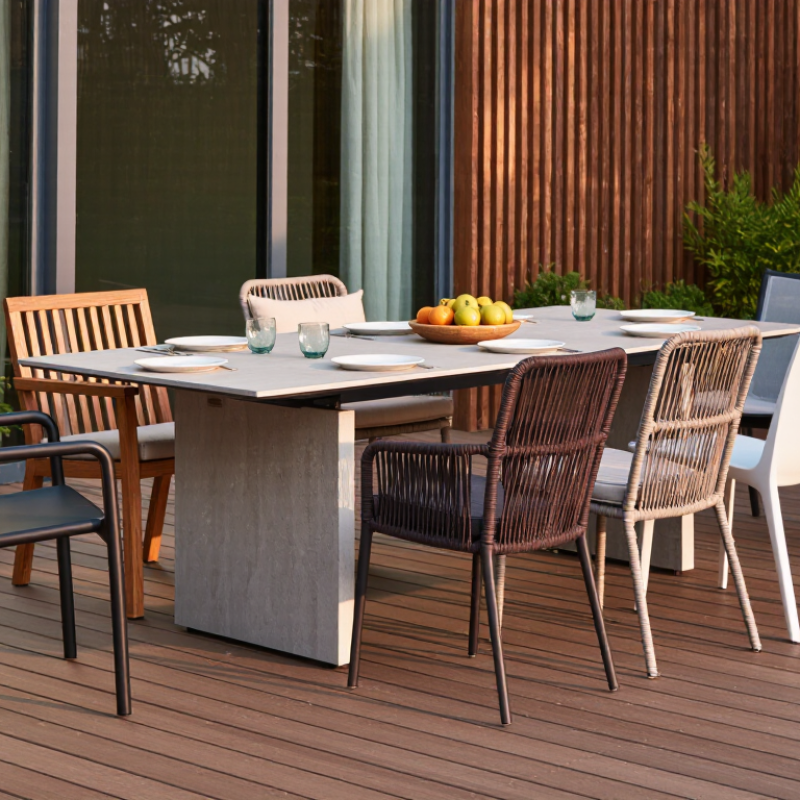
How to mix and match different outdoor dining chairs? This question matters when designing a balanced patio, terrace, or hospitality space. Chairs from China offer broad choices in aluminum, teak, rope, rattan, polypropylene, and powder-coated steel. Yet variety alone does not create harmony. The right combination needs a clear visual connection.
Outdoor furniture designer Richard Frinier has said, “Outdoor rooms should be designed with the same care and attention to detail as indoor rooms.” This principle guides every successful mix. Match one element first, such as seat height, frame color, or cushion tone. Then introduce contrast through shape, texture, or backrest design. For example, black aluminum armchairs can sit beside natural teak side chairs. Their materials differ, but their warm cushions can connect the setting.
Measure carefully. A chair that looks elegant may feel crowded around a 90-centimeter table. Check seat height, arm width, stacking ability, and clearance between legs. When sourcing from Chinese manufacturers, request material samples and finished product photos. Powder colors can vary slightly between production batches. Small differences become obvious across twelve chairs.
I prefer controlled contrast, although I may sometimes avoid bold combinations too quickly. A patio should feel coordinated, not identical. Test two or three chairs beside the actual table before ordering. Consider sunlight, rain exposure, cleaning needs, and replacement availability. The cheapest mix is rarely the most dependable choice.
A thoughtful combination gives each chair a role. One provides comfort. Another adds texture. Together, they should support conversation, movement, and long-term outdoor use.
Outdoor dining starts with conditions, not color. Measure seating frequency, rainfall, sunlight, wind, and storage space. A covered restaurant terrace needs different chairs from an exposed seaside patio.
Grand View Research valued the global outdoor furniture market at about USD 20.3 billion in 2022. Its industry analysis identifies metal, plastic, and wood as major material segments. Material selection therefore affects comfort, maintenance, and replacement costs.
Aluminum chairs suit humid areas because they resist rust and remain relatively light. Powder coating adds color, but thin finishes may chip during stacking. Choose galvanized or stainless steel frames where salt exposure is severe. Synthetic rattan offers a woven appearance, yet its quality depends on UV stabilizers and frame construction. Teak can age attractively, although it needs planned cleaning and may develop surface cracks.
I learned this through practical sourcing mistakes. A beautiful chair can fail when its feet trap water. It can also become uncomfortable under direct summer heat. Test seat height, drainage, stacking strength, and arm clearance before ordering. Request material specifications and test records referencing ASTM or ISO methods. Do not trust photographs alone.
Mixing materials can create useful contrast. Pair aluminum frames with woven seats, or combine timber-look chairs with plain metal designs. Keep seat heights consistent. Limit the palette to two or three finishes. Small differences are acceptable. Uncontrolled differences look accidental.
Mixing outdoor dining chairs from China works best when color leads the design, not chair shape. I usually choose one anchor shade, one supporting tone, and one quiet neutral. For example, deep olive chairs can sit with sand-colored seats and warm gray frames. This palette feels intentional around a teak table or pale stone patio. Keep the brightest color below half of the seating group. Too much saturation becomes tiring in strong sunlight. A little restraint helps.
Before ordering, request physical color samples and view them outdoors at noon and near sunset. Screen colors often mislead. Powder-coated metal may look cooler beside woven resin, even when both are labeled beige. Place samples beside the tabletop, paving, and nearby plants. If chairs come from different factories, compare finish gloss, not only hue. Minor variation can add character, but uncontrolled variation looks accidental. I have learned to approve a complete sample set before confirming quantities. It costs time, yet prevents an expensive mismatch.
A useful starting ratio is 60 percent anchor color, 30 percent supporting color, and 10 percent accent. Repeat the accent in cushions, planters, or tableware. Choose UV-resistant finishes and check cleaning instructions before combining materials. Dark colors can show dust, while pale surfaces may reveal food stains quickly. My first palette was attractive but too delicate for frequent family meals. That mistake changed my preference for practical mid-tones. Let the chairs differ in shape, but keep their visual temperature similar. Warm beige and terracotta usually cooperate; icy blue may fight them.
How to Mix and Match Outdoor Dining Chairs from China?
When sourcing outdoor dining chairs from China, treat the table as the anchor. Style can vary, but proportion must stay disciplined. Grand View Research estimated the global outdoor furniture market at about USD 23.6 billion in 2023. That growth encourages wider choice, but more choice can create visual noise.
Start with seat height, table height, and chair width. A 45-centimeter seat usually suits a 74-centimeter dining table. Leave about 60 centimeters of table edge per guest. Use one chair shape at the table ends, then introduce a second shape along the sides. For example, pair curved rattan-style backs with straight powder-coated metal frames. Keep their seat heights nearly identical. A dramatic height difference feels accidental. Sometimes it is.
Shape should echo the table. A round table welcomes curved backs and radial patterns. A rectangular table can carry cleaner lines, woven textures, or mixed armchairs. Avoid placing four bulky armchairs around a narrow tabletop. Guests need elbow space. The 2024 Houzz & Home Study reports that outdoor upgrades remain a common homeowner investment, showing why comfort deserves equal attention to appearance. Ask Chinese suppliers for scale drawings, material samples, and load-test information. Compare them under daylight, not only in catalog images. I would still test one mixed set before ordering a container. Color on screen can mislead. A small mismatch may become the room’s loudest detail.
Mixing outdoor dining chairs from China works best when comfort leads the design. Start with seat height, depth, and arm clearance, not color. A practical dining seat is usually about 45 centimeters high. Test a sample beside your table before ordering. One chair may look elegant but feel rigid after twenty minutes. Another may offer softer support for long meals. Use armchairs at the table ends, where extra width feels intentional. Place lighter side chairs along the longer edges for easier movement.
Function should reflect each seating position. Stackable chairs suit flexible patios and restaurant terraces. Folding models help smaller balconies, though hinges can feel less stable. Check aluminum frames, woven surfaces, drainage gaps, and outdoor-rated finishes. Ask the Chinese supplier for material details, load testing, replacement parts, and carton protection. I once overlooked table clearance, and the armrests caught every time someone stood up. That small error changed the whole layout.
Tips: Keep one visual link between different chairs. Match their frame color, weave tone, or leg shape. Limit the palette to two main finishes. Leave enough space for elbows and chair movement. Weather exposure matters too. Put more sheltered chairs beneath covered areas when materials differ. Order samples in daylight, because warm indoor lighting can hide mismatched colors. A slightly imperfect combination can feel more welcoming, but random heights usually look careless. Check comfort with real users, not only product photos.
Typical dimensions for arranging different chairs around an outdoor dining table
Use chairs with a similar seat height to maintain dining comfort, while varying seat width and overall width to create functional zones. Side chairs and stackable chairs work well for flexible seating, armchairs add comfort at the table ends, and folding chairs support occasional or space-saving use. These are representative planning dimensions in centimeters and are not brand-specific measurements.
How to Mix and Match Outdoor Dining Chairs from China?
Maintain and Replace Mixed Outdoor Dining Chairs for Long-Term Use
Mixed outdoor dining chairs can create a relaxed, collected look around one table. Chairs from China may use aluminum, teak, woven rope, plastic, or treated steel. Each material needs a different maintenance routine. I have found that matching seat height matters more than matching color. A 2-centimeter difference can make guests sit awkwardly during long meals. Check every chair on a flat surface before arranging the set.
Clean frames with mild soap and fresh water after dusty or salty weather. Dry joints carefully, especially beneath woven seats. Tighten loose screws every few months, but avoid forcing corroded hardware. Store cushions indoors when rain is expected. Small stains are easier to remove early. Harsh cleaners may weaken finishes, and I once underestimated how quickly sun exposure faded dark fabric.
Tips: Keep a simple maintenance record. Note each chair’s material, purchase date, and visible damage. Rotate chairs between sunny and shaded positions. Replace one damaged chair with a similar seat height and footprint, not only a similar appearance. Ask the supplier for spare glides, screws, fabric samples, and care instructions before ordering. Matching replacement colors can be difficult after several seasons. That is normal. A slightly different tone may look intentional when repeated across the arrangement.
Inspect welds, joints, and woven connections before each busy season. Remove chairs with unstable legs immediately. Repairable parts can extend service life, but cracked frames usually require replacement. Keep a few compatible spare chairs for unexpected damage.
| Chair Type | Typical Outdoor Material | Best Mixing Role | Recommended Table Pairing | Weather and Maintenance Considerations | Replacement Compatibility Check | Practical Service Interval |
|---|---|---|---|---|---|---|
| Aluminum Frame Chair | Powder-coated aluminum with synthetic rope, textilene, or outdoor fabric | Lightweight anchor Creates a clean, modern base for mixed seating. |
Aluminum, teak, compact laminate, or stone-look outdoor tables | Rinse away salt and dust regularly. Use a mild soap solution; avoid abrasive cleaners that can damage the coating. | Match seat height, arm width, frame finish, and the table clearance below the tabletop. | Rinse monthly in coastal locations; inspect coating, joints, and fasteners every 6 months. |
| Stackable Plastic Chair | UV-stabilized polypropylene or glass-fiber-reinforced polypropylene | Color contrast Adds visual variety and simplifies storage for flexible layouts. |
Metal, plastic, aluminum, or compact laminate tables | Look for UV-stabilized material intended for outdoor use. Prevent prolonged contact with dark, heat-absorbing surfaces when possible. | Compare seat height, leg footprint, stacking dimensions, and color batch if replacing only selected chairs. | Wash every 1–3 months; check for brittleness, fading, cracks, or distorted legs annually. |
| Synthetic Rattan Chair | Powder-coated aluminum frame with HDPE or other outdoor-rated woven strands | Texture layer Softens an industrial setting and works well as end chairs. |
Teak, aluminum, glass-top, or woven outdoor tables | Remove leaves and debris from the weave. Clean gently with a soft brush; allow cushions and the frame to dry fully after rain. | Check weave pattern, frame profile, cushion dimensions, and whether the replacement has the same seat depth. | Clean quarterly; inspect weave tension, frame joints, and cushion covers at the beginning and end of each season. |
| Teak Dining Chair | Outdoor-grade teak, often combined with stainless-steel hardware | Natural focal point Introduces warmth beside metal or synthetic materials. |
Teak, powder-coated metal, concrete-look, or stone tables | Allow air circulation and avoid standing water. Teak can weather to silver-gray naturally; oiling is optional and requires regular upkeep. | Match wood tone, seat height, arm clearance, hardware type, and the visual aging pattern of the existing set. | Clean every 3–6 months; tighten hardware and check for surface splitting once or twice a year. |
| Sling or Textilene Chair | Aluminum frame with PVC-coated polyester or outdoor mesh fabric | Comfort balance Provides flexible support beside rigid shell or wood chairs. |
Aluminum, glass, compact laminate, or lightweight ceramic-look tables | Use mild soap and water. Do not use high-pressure spray close to seams, fabric edges, or adjustment hardware. | Measure seat height, fabric tension, back angle, armrest height, and replacement panel dimensions. | Clean every 1–3 months; inspect stitching, fabric tension, and frame corrosion twice a year. |
| Outdoor Upholstered Chair | Aluminum or steel frame with quick-dry foam and solution-dyed outdoor fabric | Comfort accent Use at the head of the table or in smaller quantities to control visual weight. |
Metal, teak, composite, or covered outdoor tables with sufficient knee clearance | Choose breathable, water-resistant upholstery rather than indoor foam. Remove standing water and store cushions in a dry, ventilated place. | Match cushion thickness, seat height, fabric performance, zipper position, and frame dimensions. | Brush weekly during heavy use; wash according to fabric instructions and inspect foam recovery each season. |
| Mixed-Set Maintenance Plan | Combination of aluminum, plastic, woven, wood, mesh, and upholstered components | Long-term system Maintains a coordinated look while allowing individual chairs to be replaced. |
Keep tabletop height, seat height, and circulation space consistent across the group. | Use one neutral cushion or finish family to unify different chair forms. Keep a record of dimensions, finishes, and spare hardware. | Replace by function and dimensions first; compare color and texture second. Test one sample chair before a larger replacement order. | Perform a full inventory and safety inspection every 6–12 months, with earlier checks after storms or commercial-level use. |
A seat near 45 centimeters usually suits a table around 74 centimeters high. Test one chair first.
Match one feature, such as frame color, weave tone, or leg shape. Curved backs suit round tables, while clean lines suit rectangular tables.
Yes. Place wider armchairs at the table ends. Use lighter chairs along the longer sides for easier movement.
Allow about 60 centimeters of table edge per guest. This gives elbows and chair movement more room.
Request scale drawings, material samples, load-test details, replacement parts, and carton protection information. Compare samples in daylight.
Stackable chairs suit flexible patios. Folding chairs help small balconies. Check drainage gaps, hinges, welds, and outdoor-rated finishes.
Wash frames with mild soap and fresh water after dusty or salty weather. Dry joints beneath woven seats carefully.
Remove chairs with unstable legs immediately. Replace cracked frames rather than forcing repairs. Keep compatible spare chairs nearby.
Match seat height and footprint before color. A slightly different tone may look intentional when repeated.
Large height differences often look accidental. I once ignored table clearance, and armrests caught whenever guests stood.
Mixing outdoor dining chairs from China can create a practical and inviting dining area when the selection is guided by comfort, durability, and visual balance. Start by considering the climate, frequency of use, table size, and maintenance needs, then choose suitable materials such as weather-resistant metal, treated wood, plastic, or woven finishes. A coordinated color palette helps different chair designs feel intentional, while subtle contrasts can add character without making the space look disorganized. The key question is: How to mix and match different outdoor dining chairs? The answer begins with combining colors, materials, and finishes that share at least one visual connection.
Next, balance chair styles, shapes, and proportions around the table so that no design feels out of place. Arrange chairs to provide enough legroom, easy movement, and consistent comfort for every guest. Finally, inspect mixed chairs regularly, clean them according to their materials, protect them from harsh weather, and replace damaged pieces with options that match the existing palette and dimensions. With thoughtful planning and ongoing care, a mixed-chair arrangement can remain attractive, functional, and comfortable for years.

GIVANI Furniture