Outdoor dining should feel inviting, not like an open buffet for mosquitoes, flies, and wasps. The question is practical: How to keep bugs away from outdoor dining areas? Effective prevention begins before guests arrive. Inspect the space in daylight. Look beneath tables, around planters, and near drains. A forgotten drink spill can attract insects within minutes. Standing water in saucers, buckets, or uneven paving also creates trouble.
Dr. Michael Skvarla, an extension entomologist and insect identification specialist, offers a useful principle: “The best insect control begins by removing food, water, and shelter.” That advice sounds simple. It is not always easy to maintain. Staff should wipe tables after every service, seal rubbish containers, and store food in covered containers. Fans can disturb flying insects around dining tables, while fine-mesh screens help protect enclosed patios. However, heavily scented candles and sweet fragrances may attract more attention than expected.
Lighting deserves careful thought. Bright lights near doors can draw moths and other insects toward guests. Warmer, shielded bulbs may reduce that effect. Repellents can help, but they should follow the product label and never contact food or dining surfaces. Professional inspection may be worthwhile when activity continues despite cleaning. Still, even experts can miss small breeding spots. A damp floor drain. A cracked planter. An overflowing bin. Regular checks, realistic staff routines, and quick cleanup create the strongest defense for comfortable outdoor dining in 2026.
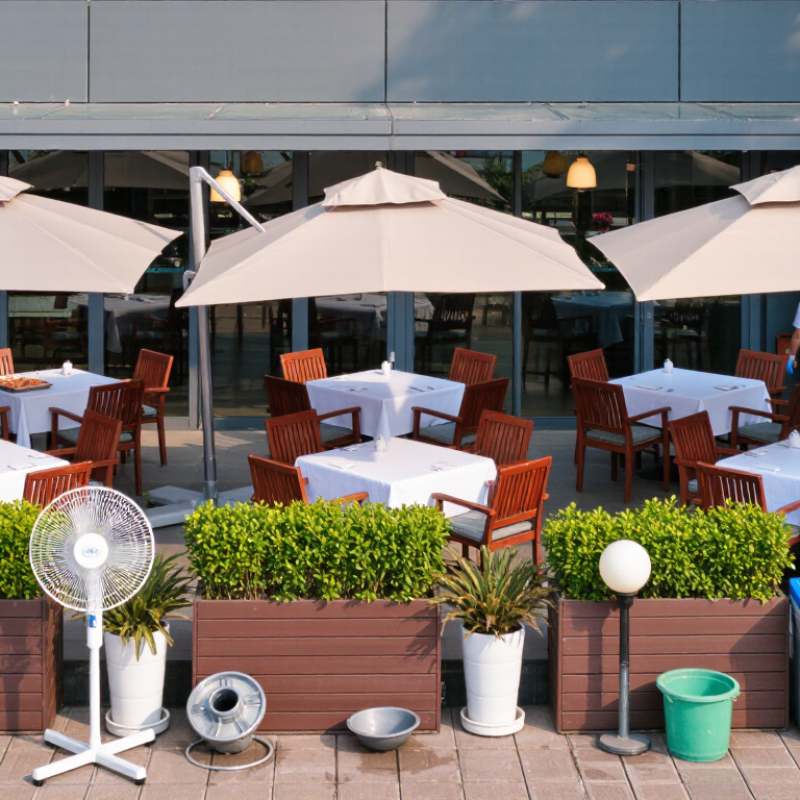
Outdoor dining bugs rarely arrive randomly. They follow water, shade, food odors, and resting surfaces. In 2026, audit each seating area with a practical three-D version of CDC mosquito guidance: Drain, Dress, and Defend. CDC guidance stresses removing standing water and using physical barriers. The method turns broad advice into observable checks.
Drain: inspect umbrella bases, planter saucers, gutters, bins, and folded furniture after rain. Empty small containers daily. Fix puddles near walkways. Record the location, time, and action taken. We once overlooked water trapped inside a hollow table leg. That small mistake mattered. Recheck areas after irrigation, storms, and landscaping work.
Dress staff in practical coverage during peak mosquito hours, especially near gardens and damp edges. Long sleeves help, but comfort affects compliance. Review approved repellent use according to label directions and local rules. Defend the dining zone with screens, fans, tight-fitting lids, and carefully positioned lighting. Keep food covered and remove spills quickly. Inspect cracks beneath decks, where mosquitoes may rest during the day. A simple map can mark hot spots in red. Do not rely on one treatment. Our weak point was inconsistent follow-up; a checklist existed, but nobody owned it. Assign one person per shift, then verify the log.
Check them weekly, and inspect again after heavy rain. Mosquitoes can develop in bottle caps, saucers, buckets, and clogged drains. Empty, remove, or tightly cover every container. Small puddles still matter.
Inspect beneath stacked chairs, umbrellas, planters, bins, and furniture. Check low spots near service entrances and drainage areas. Folded covers can hold water too. Our first inspection missed water under chairs.
Record the date, inspection areas, and staff initials. Tip over containers after rain. Scrub sticky drainage residue and clear blocked gutters. Add a second review during busy seasons. Checklists help, but they are not perfect.
Properly fitted 16-mesh screens create a useful barrier around dining spaces. They can reduce flies, mosquitoes, and larger crawling insects. Seal edges around frames, corners, and counters. Tiny gaps often defeat careful work.
They reduce the time entrances remain open during deliveries and busy service. Warm food, lights, and waste can attract insects. Check the closing speed after heavy traffic. A door closer helps, but it is not flawless.
Place traps near waste bins, lights, entry points, and quiet corners. Keep them away from guests, food, and food-contact surfaces. Count captures on the same day each week. Record location, insect type, weather, and dining activity.
Take dated photos and inspect nearby doors, drains, bins, and spills. Write specific notes, such as “12 flies beside the service door.” Replace damaged or saturated traps. High counts need investigation, not automatic spraying.
Read the complete approved label before any use. Confirm outdoor food-service permission and follow listed rates, placement, timing, and safety measures. Keep guests and uncovered food away during the stated restriction period. Never apply extra product. Wind and rain can move treatments beyond the intended area. Review the result afterward.
How to keep bugs away from outdoor dining areas? Start by inspecting the space through three practical risk zones: breeding areas, entry points, and food-service areas. Remove standing water from containers, drains, planters, and low spots at least once a week. Keep tables, floors, and waste stations clean, and repair leaks that may attract insects. Trimming dense vegetation and improving airflow can also reduce hiding places around the dining area.
Protect indoor service connections with 16-mesh screens and self-closing doors, while keeping food covered and refrigerated at 41°F or below. Use traps to monitor insect activity and record weekly counts so staff can identify trends early. If pest-control products are needed, select only legally approved products and follow every label direction, including application limits, storage rules, and required waiting periods. A consistent routine combining sanitation, exclusion, temperature control, and careful monitoring helps maintain a cleaner, safer, and more comfortable outdoor dining environment.

 GIVANI Furniture