China Top 10 Outdoor Rugs for Wooden Decks

Time:2026-09-30 Author:Sophia
0%

Can outdoor rugs be used on wooden decks? Yes, when the rug allows moisture to escape and the boards can dry. The detail matters. A thick, rubber-backed mat can hold rainwater against timber, leaving dark marks or encouraging decay. The USDA Forest Products Laboratory’s Wood Handbook (FPL-GTR-282) explains that wood-decay fungi need favorable moisture conditions; wood moisture content around 20% or higher can create risk. That is a useful warning, not a guarantee that every damp deck will deteriorate.

Wood scientist Richard J. Ross has contributed to the Forest Products Laboratory’s wood research. A fair paraphrase of that guidance is: let deck boards dry fully between wettings. Check beneath the rug after rain, and lift it regularly. Small habits help.

This China Top 10 guide compares outdoor rugs for wooden decks by material, backing, drainage, durability, and ease of cleaning. Look for quick-drying polypropylene, breathable construction, and a backing that will not scratch or stain the finish. Avoid leaving any rug in one position all season. Even a well-made rug can trap grit underneath; that is an easy detail to miss.

A deck’s exposure changes the right choice. A shaded balcony may stay damp longer than a sunny, open deck. Measure the space, check the product’s care instructions, and test a small area before placing a large rug. Style counts, too. But dry boards matter more.
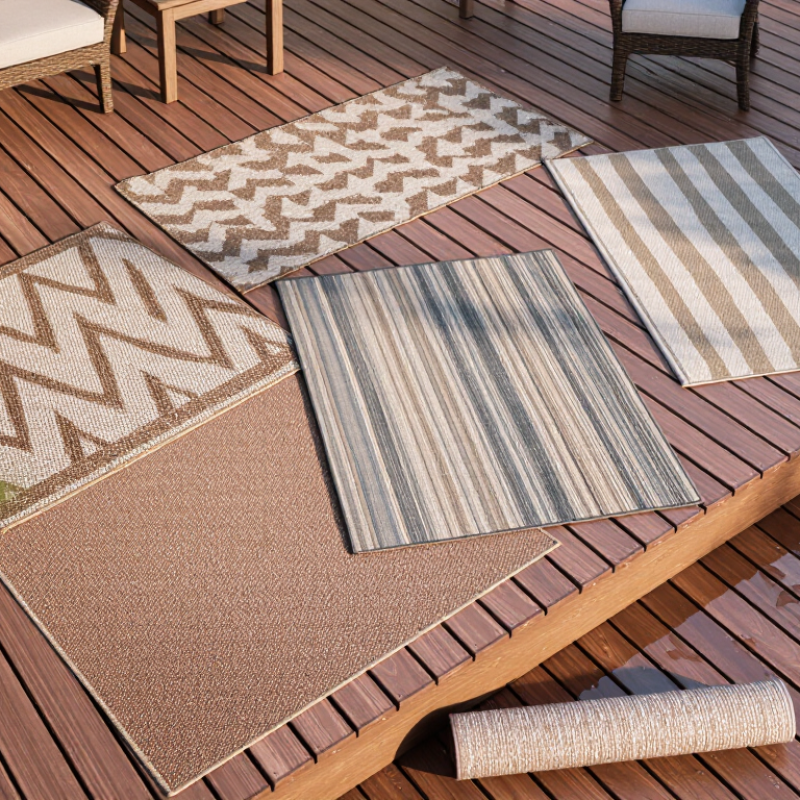
China Top 10 Outdoor Rugs for Wooden Decks

How Outdoor Rugs Enhance and Protect Wooden Decks

An outdoor rug can make a wooden deck feel like a room, not just a walkway. It softens the space beneath a dining table and gives bare feet a warmer landing on cool mornings. A well-sized rug also helps define seating areas, making furniture feel less scattered. Small details matter. Choose a size that lets chairs remain on the rug when pulled out; otherwise, edges can curl or catch underfoot.

Rugs can reduce everyday scuffs from chair legs and help catch grit before it scratches deck boards. They also limit direct sunlight on the covered area, though the exposed wood may weather differently over time. A breathable, quick-drying rug is usually a better choice than one that holds water against the boards. Check the backing, too. Some materials may transfer color or trap moisture, especially after rain. Lift the rug now and then, sweep underneath, and let both surfaces dry.

Placement takes a little trial and error. Avoid covering damp boards, and leave space around the deck’s edges for airflow. After storms, check for puddles and debris beneath the rug. Give it room to breathe. Even a suitable outdoor rug cannot prevent fading, moisture damage, or normal wear. Think of it as one layer of care, alongside regular cleaning and deck maintenance.

Key Materials Used in Outdoor Rugs Sold in China

Outdoor rugs sold in China commonly use polypropylene, polyester, or PVC-based yarns. These materials generally handle moisture better than untreated cotton. Polypropylene is lightweight and dries quickly after a summer shower. Its color may fade under strong, prolonged sun, depending on the dye and UV treatment. PET, including recycled PET, often feels softer underfoot and comes in flat, easy-to-clean weaves. Check the product details. The material name alone is not enough.

PVC-based rugs resist water, but some feel warm or slippery when wet. On a wooden deck, a dense backing can hold dampness against the boards, especially in shaded corners. Open weaves and textured surfaces may allow better airflow and drainage. Small details matter. Bamboo and other natural fibers offer a quieter, tactile look, but repeated rain can make them harder to maintain.

For deck use, compare UV resistance, edge finishing, backing, and cleaning instructions rather than relying on a material label. A pale rug may show leaf stains; a dark one can grow hot in midday sun. Test a sample if possible. I would still lift and dry the rug after long wet spells, since even durable synthetic fibers cannot keep the timber beneath them dry. That step is easy to forget.

How to Choose a Rug by Deck Size, Climate, and Use

Choosing among the top outdoor rugs for wooden decks starts with accurate measuring. Keep door swings, stairs, and drainage paths clear. A 5-by-7-foot rug suits a compact balcony or bistro set. An 8-by-10-foot rug usually anchors a medium seating area. For a 10-by-12-foot deck, a 9-by-12-foot rug can frame furniture while leaving a visible wood border. That border matters. It helps rainwater escape and makes the deck feel less crowded. Measure twice. I still get this wrong sometimes.

Climate should guide the rug’s construction. NOAA’s 1991–2020 Climate Normals provide 30-year averages for precipitation, humidity, snowfall, and temperature. Compare those figures with your local exposure, not a generic regional label. In wet climates, choose a quick-drying, breathable rug with a low-pile surface. In strong sun, look for solution-dyed fibers and documented UV resistance. The USDA Forest Products Laboratory’s Wood Handbook explains how moisture changes can make wood swell and shrink. A non-breathable backing may trap water against deck boards.

Use also changes the right choice. A dining rug needs a flat weave, so chair legs move without catching. A lounge rug can feel softer, but thick piles collect leaves and dry slowly. For high-traffic paths, select darker patterns and tightly woven fibers. Check the underside after rain. If moisture remains after 24 hours, rethink the placement, backing, or rug size. Small compromises are acceptable; persistent dampness is not.

Ten Outdoor Rug Options for Wooden Decks in China

Wooden decks in China face strong sun, sudden showers, and humid spells. A suitable rug should dry quickly, allow water to drain, and have a backing that will not stay damp against the boards. Feel the underside before buying. A dense, rubberized backing may protect the rug, but it can also hold moisture beneath it.

Ten options suit different deck conditions: flatweave polypropylene for everyday use; recycled-PET weave for a soft feel; quick-drying polyester for covered areas; solution-dyed acrylic for sunny spots; PVC mesh for easy drainage; woven vinyl for a firm surface; braided polyolefin for a textured look; bamboo slat mats for a natural finish; open-grid rubber mats for wet entryways; and cotton-poly blends for sheltered decks. The last option takes longer to dry. Use it with care.

Measure the deck before choosing a size, and leave a strip of exposed wood around the rug so rainwater can escape. Check the surface underneath after wet weather. If boards look darker or feel damp, lift the rug and let everything dry. Even a well-made outdoor rug can cause trouble when left in one place all season. I would move it more often than seems necessary.

China Top 10 Outdoor Rugs for Wooden Decks - Ten Outdoor Rug Options for Wooden Decks in China
Option Rug Type Primary Material Common Size Approx. Weight Weather & UV Performance Drainage and Deck Safety Cleaning Method Recommended Use Indicative Price in China
1 Flat-Woven Recycled Plastic Rug Recycled polypropylene 120 × 180 cm 1.5–2.2 kg Good resistance to moisture, mildew, and sunlight; color may fade gradually with continuous exposure. Low-profile weave allows water to pass through; use a breathable rug pad or lift periodically. Shake, sweep, or rinse with a garden hose; air-dry completely. Dining areas, seating zones, and compact wooden balconies. ¥80–¥180
2 Outdoor Polyester Flatweave Solution-dyed polyester 160 × 230 cm 2.0–3.0 kg Good color retention and quick drying; suitable for covered or partly exposed decks. Flat construction reduces door clearance issues; place away from locations where water pools. Vacuum or sweep regularly; spot-clean with mild soap and water. Patio tables, lounge furniture, and covered deck seating. ¥120–¥260
3 High-Density Polypropylene Rug UV-treated polypropylene 160 × 230 cm 2.5–3.8 kg Strong moisture resistance and good outdoor durability; UV treatment helps slow fading. Woven backing supports drainage; avoid trapping dampness against timber boards. Hose-clean when needed and dry on both sides before reuse. Open decks exposed to occasional rain and everyday foot traffic. ¥150–¥320
4 Reversible Outdoor Rug Polypropylene or recycled plastic fibers 180 × 270 cm 3.0–4.5 kg Both sides can be used; resistant to normal outdoor humidity and light rain. Reversible design helps distribute wear; corners may require outdoor rug clips in windy areas. Turn over periodically, sweep, and rinse with clean water. Large deck seating groups and multipurpose outdoor areas. ¥180–¥380
5 Perforated Plastic-Mat Rug Flexible PVC or polyethylene 90 × 150 cm 1.0–1.8 kg Very good resistance to water and humidity; prolonged direct sun may affect flexibility over time. Perforations provide fast drainage and reduce water retention on wooden boards. Wipe or hose-clean; use a soft brush for textured surfaces. Entry points, barbecue areas, utility zones, and wet-climate decks. ¥60–¥160
6 Low-Pile Indoor-Outdoor Rug Polypropylene with latex-free backing 200 × 300 cm 4.0–6.0 kg Good resistance to stains and moisture; best performance under partial shade or regular maintenance. Low pile reduces trapped debris; avoid non-breathable rubber backing on wooden decks. Vacuum, blot spills, and rinse occasionally with mild detergent. Covered terraces and larger deck rooms with outdoor sofas. ¥260–¥520
7 Outdoor Runner Rug Polyester or polypropylene 80 × 240 cm 1.4–2.5 kg Moderate to good UV and moisture resistance depending on fiber treatment. Narrow profile fits walking paths; secure the ends to prevent curling or movement. Sweep frequently and spot-clean with diluted mild soap. Deck walkways, balcony corridors, and areas beside outdoor kitchens. ¥90–¥220
8 Textured Woven Outdoor Rug Polypropylene with woven surface 120 × 180 cm 1.8–2.8 kg Good resistance to everyday outdoor wear; textured colors can help conceal light dirt. Open weave supports airflow, but the rug should be lifted after heavy rain. Shake out loose dirt, vacuum on low power, and rinse when necessary. Decorative seating corners and small wooden rooftop decks. ¥110–¥240
9 Heavy-Duty Commercial-Style Rug High-density polypropylene 200 × 300 cm 4.5–7.0 kg Very good abrasion resistance and suitable for frequent use; periodic cleaning helps maintain appearance. Dense flat weave is stable under furniture; inspect the deck below to prevent moisture marks. Regular vacuuming, hose rinsing, and complete air-drying. High-traffic deck areas, hospitality spaces, and family entertaining zones. ¥350–¥700
10 Natural-Fiber Look Outdoor Rug Weather-resistant synthetic fiber designed to resemble jute 160 × 230 cm 2.5–4.0 kg Better outdoor performance than untreated natural fibers; prolonged wet conditions should still be avoided. Flat woven construction is suitable for timber decks; use only with a breathable, non-staining pad. Dry-clean loose soil with a brush or vacuum; use minimal water for spot treatment. Decorative decks where a natural woven appearance is preferred. ¥180–¥420
Note: Dimensions, weights, and prices are typical market ranges for comparable outdoor rug constructions in China. Actual specifications vary by size, fiber density, backing, finishing, and supplier. For wooden decks, choose breathable rugs, avoid prolonged moisture retention, and lift the rug periodically to allow the timber surface to dry.

How to Place and Maintain Rugs on Wooden Decks

Outdoor rugs can make a wooden deck feel warmer and more comfortable. Placement matters more than appearance. Choose a rug that allows airflow and drains rain quickly. Dense rubber backing may trap moisture against the boards. That can encourage mildew, discoloration, or uneven drying.

Keep the rug several centimeters away from railings and walls. Leave visible gaps around its edges. Center it under seating, but avoid covering every deck board. A breathable outdoor rug pad can reduce movement, provided it does not hold water. Secure loose corners with suitable outdoor fasteners, not sharp objects that may damage the wood. Before full placement, test the rug and pad on a hidden section. Wood finishes can react differently.

Maintenance needs a simple routine. Shake or vacuum the rug weekly, especially under tables where leaves collect. After rain, lift it and check the deck underneath. Let both surfaces dry completely before replacing the rug. Every few weeks, wash the rug according to its care instructions and inspect for fading, loose fibers, or trapped dirt. I once left a rug down through a wet season, and the hidden boards darkened slightly. It was a useful mistake. Now I move rugs during long rainy periods and inspect the deck monthly. Still, I sometimes return them too quickly after cleaning. A few extra drying hours are usually wiser.

FAQS

Which materials are commonly used in outdoor rugs sold in China?

Common options include polypropylene, polyester, recycled PET, and PVC-based yarns. Polypropylene dries quickly. Recycled PET often feels softer. Material labels alone need careful checking.

Is polypropylene suitable for a sunny wooden deck?

It can work well because it is lightweight and dries quickly after rain. However, strong sunlight may fade its color over time. UV treatment and dye quality make a noticeable difference.

Do PVC-based outdoor rugs prevent moisture problems?

They resist water, but some surfaces may feel warm or slippery when wet. Dense backing can trap dampness against deck boards. Airflow matters more than appearance.

How should an outdoor rug be placed on a wooden deck?

Leave several centimeters between the rug, walls, and railings. Keep visible gaps around the edges. Center it under seating without covering every board. That small gap helps rain escape.

Can a rug pad be used under an outdoor rug?

Yes, if the pad allows airflow and does not hold water. Test it on a hidden deck area first. Some finishes may react differently. I would not skip this test.

How often should an outdoor deck rug be cleaned?

Shake or vacuum it weekly, especially beneath tables. Leaves and trapped dirt collect there quickly. Wash it every few weeks according to its care instructions. Simple, but easy to forget.

What should be done after heavy rain?

Lift the rug and inspect the wood underneath. Dry both surfaces completely before replacing the rug. During long wet periods, move the rug temporarily. A few extra drying hours help.

Can natural-fiber rugs be used outdoors?

Bamboo and similar fibers provide a quiet, textured appearance. Repeated rain can make them harder to maintain. They need more careful drying and inspection than many synthetic rugs. They look pleasant. Maintenance is less pleasant.

How can rug movement be reduced without damaging the deck?

Use suitable outdoor fasteners for loose corners. Avoid sharp objects that could scratch or pierce the wood. Test the fastening method before full installation. A secure rug still needs airflow.

Conclusion

This guide explores how outdoor rugs can improve the comfort, appearance, and protection of wooden decks in China. The question “Can outdoor rugs be used on wooden decks?” is answered by explaining how suitable rugs can reduce surface wear, limit dirt and moisture contact, and create a more inviting outdoor living area when properly selected and installed. It also reviews common materials, including polypropylene, polyester, recycled fibers, and other weather-resistant options, focusing on their durability, drying speed, texture, and ease of cleaning.

The article presents ten practical outdoor rug options for wooden decks, organized around different sizes, climates, and uses, such as dining, relaxation, and entertaining. It explains how to match rug dimensions with deck layouts, choose breathable designs for humid conditions, and select heavier or more stable styles for windy areas. Finally, readers will learn how to place rugs with adequate airflow, avoid trapped moisture, rotate them regularly, clean spills promptly, and inspect both the rug and deck to help maintain a safe, attractive outdoor space.

Sophia

Sophia

Sophia is a dedicated marketing professional with an exceptional depth of knowledge about her company's products and services. With a keen understanding of market trends and customer needs, she crafts insightful blog posts that not only inform but also engage readers, enriching the company’s online......