A small balcony can become a comfortable outdoor room with the right furniture arrangement. However, limited space punishes careless choices. A bulky chair may block the door, while a deep table can make movement frustrating. This guide explores China best small balcony furniture arrangement tips through practical measurements, space-saving ideas, and everyday usability.
How to arrange furniture on a small apartment balcony? Start by measuring the balcony, doorway, railing, and usable floor area. Leave enough clearance for safe entry and comfortable movement. A narrow folding table, stackable stools, or a compact bench can create flexible seating without overwhelming the space. Weather-resistant materials also matter, especially in humid or rainy regions. Powder-coated metal, treated wood, and UV-resistant fabrics usually perform better outdoors. Still, no material stays perfect forever. Regular cleaning and checking loose screws remain necessary.
Experienced designers often recommend keeping taller pieces against the shortest wall. This preserves sightlines and makes the balcony feel wider. A small corner chair can support reading, while a wall-mounted planter adds greenery without taking floor space. Yet personal habits should guide the final layout. A coffee drinker may need a stable side table, while a plant lover may prefer open shelving. Measure twice.
This article also considers comfort, drainage, sunlight, and balcony load awareness. It avoids unrealistic showroom layouts and focuses on arrangements that work in real apartments. Some ideas may need adjustment. That is normal. Good design should fit daily life, not merely look attractive in photographs.
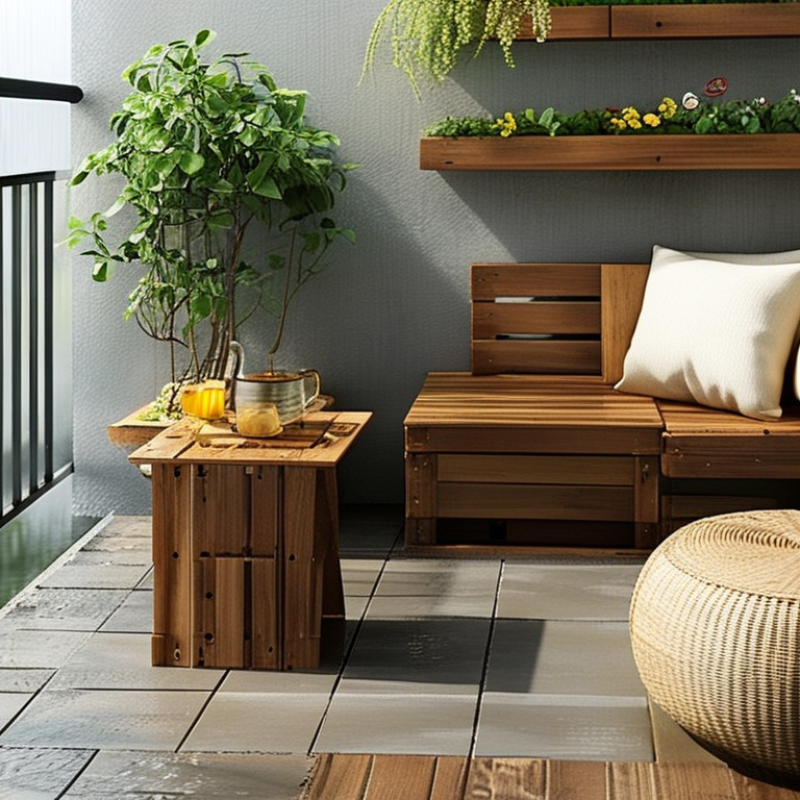
A small balcony needs measurement before decoration. Record its length, depth, door swing, railing height, and drainage points. Leave at least 60 centimetres for comfortable movement. My first layout looked elegant, but blocked the sliding door. That mistake taught me to sketch circulation first. The U.S. Department of Energy’s daylight guidance notes that south-facing openings usually receive stronger winter sunlight. East-facing balconies offer gentler morning light. West-facing spaces can become sharply hot after 3 p.m.
Tip: Watch the balcony for one full day. Note glare, wind, rain exposure, and shaded corners. Use a phone light meter as a rough guide, not absolute truth. The Illuminating Engineering Society commonly recommends about 300–500 lux for reading tasks. A balcony may never reach that level naturally. Choose the intended use honestly: coffee, reading, dining, gardening, or quiet storage. One chair and a narrow folding table may serve better than a crowded sofa.
The 2024 Houzz Outdoor Trends Study identifies outdoor living as a continuing renovation priority, but larger spending habits do not suit every balcony. Select furniture that matches the actual space. A 40-centimetre-deep bench can preserve foot traffic. Stackable chairs support occasional guests. Light-colored cushions may reduce heat, yet they show dirt quickly. I prefer movable pieces, because weather and daily habits change. Measure twice. Small errors become obvious.
| Balcony Type | Typical Usable Size | Light and Weather Conditions | Recommended Intended Use | Furniture Arrangement | Suggested Furniture Dimensions | Minimum Clear Passage | Practical Arrangement Tips |
|---|---|---|---|---|---|---|---|
| Very Narrow Balcony | 1.0–1.2 m wide × 2.5–4.0 m long | Often receives direct sunlight on one side; wind exposure can be noticeable. | Reading, morning coffee, or compact plant display | Place one narrow chair or two foldable chairs along the longest wall. Keep plants on the opposite wall. | Chair depth: 45–55 cm Foldable table: 35–45 cm diameter or 35 × 50 cm |
At least 60 cm | Use foldable furniture and wall-mounted shelves. Avoid deep sofas and fixed planters that reduce circulation. |
| Compact Square Balcony | 1.5–2.0 m wide × 1.5–2.0 m long | Light is usually distributed across the space, but nearby walls may create partial shade. | Two-person seating and occasional dining | Position a small round table in one corner with two lightweight chairs placed on adjacent sides. | Round table diameter: 60–75 cm Chair depth: 45–55 cm |
At least 60 cm | Round tables reduce sharp corners and make movement easier. Choose stackable chairs for flexible floor space. |
| Shaded or North-Facing Balcony | 1.2–2.0 m wide × 2.0–4.0 m long | Lower direct-sun exposure; surfaces may remain damp longer after rain. | Relaxation, storage, and shade-tolerant gardening | Use a compact bench against the back wall and keep a narrow storage unit near the entrance. | Bench depth: 40–50 cm Storage depth: 30–40 cm Seat height: 42–48 cm |
At least 60 cm | Choose quick-drying cushions and corrosion-resistant hardware. Raise storage slightly from the floor to improve ventilation. |
| Sunny or South-Facing Balcony | 1.5–2.5 m wide × 2.5–5.0 m long | Several hours of direct sunlight; furniture and fabrics may experience heat and color fading. | Sunbathing, plant growing, and outdoor dining | Place a small bistro table near the shaded side and arrange sun-tolerant plants along the perimeter. | Table diameter: 60–80 cm Planter depth: 20–35 cm Lounger width: 55–65 cm |
At least 60 cm | Use UV-resistant fabrics, light-colored surfaces, and movable shade. Secure lightweight furniture against strong wind. |
| Work-from-Home Balcony | At least 1.5 m wide × 2.0 m long | Glare, heat, rain, and unstable Wi-Fi conditions may affect comfort and equipment. | Short work sessions or laptop use | Place a slim desk against a wall and use one chair that can be moved indoors after use. | Desk depth: 45–55 cm Desk width: 80–100 cm Chair depth: 45–55 cm |
At least 70 cm | Keep electronics away from open edges and rain. Add a small cable box and use a matte tabletop to reduce glare. |
| Family-Friendly Balcony | At least 2.0 m wide × 3.0 m long | Conditions vary; safety becomes more important where children or pets are present. | Seating, supervised play, and family meals | Use low-profile seating along the wall and keep the central area open for movement. | Bench depth: 45–55 cm Table height: 45–75 cm Storage depth: 30–40 cm |
At least 75 cm | Use rounded edges, stable weighted furniture, and secured storage. Do not place climbable furniture next to railings. |
| Plant-Focused Balcony | 1.2–2.0 m wide × 2.0–4.0 m long | Light may vary considerably from the railing to the wall; watering can increase floor moisture. | Container gardening and quiet seating | Group plants by light requirements along the railing or side wall, leaving one corner for a chair. | Plant shelf depth: 20–30 cm Chair depth: 45–55 cm Pot diameter: 15–35 cm |
At least 60 cm | Use saucers and waterproof trays. Confirm the balcony’s permitted load before adding many large, wet containers. |
| Rental Balcony with Limited Storage | 1.0–2.0 m wide × 2.0–4.0 m long | Furniture may need to be moved indoors during storms or when the property is inspected. | Flexible seating and seasonal use | Combine two folding chairs with a collapsible table and store them vertically against a wall when unused. | Folded chair depth: 10–20 cm Table depth: 40–60 cm Storage footprint: 30–45 cm |
At least 60 cm | Prioritize lightweight, stackable pieces. Avoid drilling unless permitted, and use removable hooks for small accessories. |
Keep about 60 centimeters clear where possible. This helps carry laundry baskets and watering cans. Keep it clear.
Place it against a wall, away from the doorway. This protects the entrance and preserves movement.
Folding chairs and tables work well. They can disappear when the balcony becomes a drying area.
Use a slim bench for sitting and a narrow vertical shelf for plants and tools. Keep taller items against the wall.
Measure the floor, door swing, railing, drainage points, and vents. These details prevent awkward placement later.
Sit down, open the door, and carry a full basket through the space. If your knees hit the table, revise it.
Choose stable frames with non-slip feet. Never use chairs or boxes as climbing steps near the railing.
Choose weather-resistant materials that resist fading, cracking, and corrosion. Keep cushions dry and use shade when possible.
Not always. A centered table may look attractive but interrupt movement. A corner position can work better, though seating may feel less comfortable.
Use fewer objects, not merely smaller ones. Choose storage that doubles as seating. Small changes matter.
Creating a comfortable small balcony begins with understanding its size, natural light, ventilation, and intended purpose. Decide whether the space will be used for dining, relaxing, gardening, or a combination of activities. Then select compact, foldable, stackable, or multifunctional furniture that suits Chinese apartment layouts without making the balcony feel crowded. How to arrange furniture on a small apartment balcony? Start by placing the largest item against a wall or railing, keeping a clear walking path and dividing the area into practical zones, such as seating, dining, or plant care.
Use vertical shelves, wall-mounted hooks, and narrow storage units to make full use of unused height while keeping the floor open. Accessories such as storage benches, folding tables, and movable stools can provide flexibility and reduce clutter. Finally, choose comfortable, weather-resistant materials and secure every item against wind. Coordinate colors, textures, and plant placement to create a visually balanced balcony that is safe, functional, easy to maintain, and inviting throughout the year.

 GIVANI Furniture