When is the best time of year to buy patio furniture? The answer depends on your weather, storage space, and shopping patience. In many markets, late summer and early fall offer the strongest discounts. Retailers often reduce outdoor collections between August and October. They need room for holiday merchandise and next year’s designs. However, popular sizes and colors may disappear quickly. Waiting too long can create a cheaper cart, but an empty patio.
Outdoor-living expert and furniture buyer Julie McCoy explains, “The smartest patio-furniture purchases often happen when retailers make room for next season’s designs.” Her observation reflects a common retail cycle. Spring brings the widest selection, especially for dining sets, sectionals, and weather-resistant cushions. Prices may be higher then, but shoppers can compare fabrics and frame materials more easily. Memorial Day and Labor Day sales can also produce useful opportunities. Not every “sale” is a genuine bargain, though.
A practical buyer should inspect more than the price tag. Look for powder-coated aluminum, treated wood, solution-dyed fabric, and sturdy joinery. Check return policies before ordering oversized pieces. Measure doors, balconies, and storage areas twice. One mistake can turn a discount into an expensive delivery problem. I have found that the ideal month changes by region, and online advice can oversimplify it. A cold northern climate may discount furniture earlier than a warm coastal market. This guide examines seasonal pricing, clearance timing, holiday promotions, and product quality. It will help you choose a buying window that fits your budget, climate, and real outdoor-living needs.
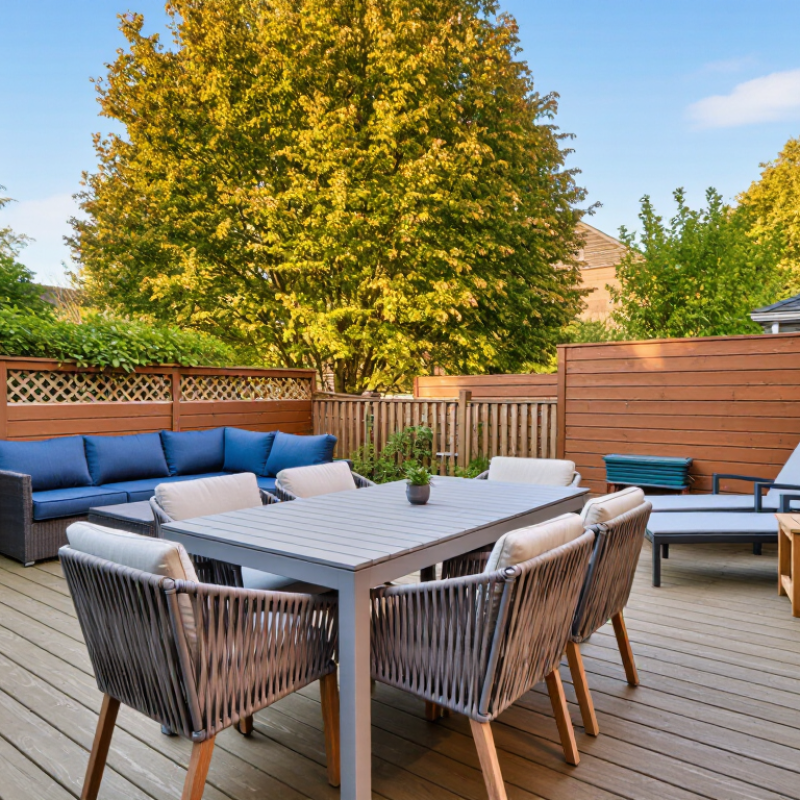
Patio furniture prices usually rise when warmer weather increases outdoor living demand. In my buying experience, spring offers the widest selection, but rarely the lowest prices. Retailers often introduce new collections between March and May. Popular colors and standard table sizes can sell quickly. The pattern is not perfectly predictable. Regional weather, shipping costs, and supply levels can change pricing within weeks.
Late summer often creates stronger opportunities for careful shoppers. Retailers may reduce prices to clear floor space for autumn merchandise. A complete dining set could receive a larger discount than a single chair. However, clearance products may have limited colors or minor cosmetic marks. I once delayed too long and found only mismatched pieces. That mistake still affects my buying schedule.
Winter can bring the lowest advertised prices, especially in colder regions. Yet selection is usually narrower, and storage fees may reduce the savings. Check price histories rather than trusting large discount labels. Compare frame materials, cushion construction, delivery charges, and warranty terms. A low price is not always a low total cost.
I also watch local weather forecasts, because an early warm spell can revive demand. Track prices for several weeks. Patterns become clearer with records.
The best month depends on your priority: choice, price, or immediate delivery. March through May usually offers the widest selection, as retailers prepare for warmer weather. The U.S. Census Bureau’s 2023 Annual Retail Trade Survey reported roughly $140 billion in furniture and home-furnishings sales. Its monthly retail data also shows stronger activity during spring and summer. That pattern supports early shopping, especially for matching chairs, cushions, and dining sets.
Late August through October often brings deeper discounts. Stores clear seasonal inventory before colder months arrive. However, availability becomes less predictable. Popular colors may disappear first, while floor models may have minor scratches or missing packaging. I would inspect every piece carefully. A discount is not automatically a good deal. November and February can offer quiet pricing, but selection is usually narrow. Delivery may also take longer because warehouses reduce outdoor inventory.
Tips: Start comparing prices in February. Save screenshots of product dimensions and delivery estimates. Check frame materials, fabric ratings, and return terms before buying. Use the U.S. Census Bureau’s monthly sales reports to understand broader demand, but do not treat them as a perfect patio-furniture calendar. Climate changes everything. In warm regions, demand can remain strong through winter. In colder areas, September may be the practical buying window. Availability matters more than a dramatic markdown.
| Month | Typical Selection | Discount Potential | Availability | What Usually Happens | Best Buying Strategy |
|---|---|---|---|---|---|
| January | Medium | Medium | Medium | Retailers may begin clearing previous-season inventory after the holidays, while outdoor demand is generally low in colder regions. | Look for clearance pieces and indoor showroom promotions. Check measurements, finish condition, and warranty details carefully. |
| February | Medium | Medium | Medium | Some retailers prepare for spring merchandise, but the full range of new outdoor collections may not yet be available. | Shop early if you need a basic set, but compare delivery dates because regional inventory can be limited. |
| March | High | Low to Medium | High | Spring launches typically increase the number of styles, colors, sizes, and configurations available. | Prioritize selection. This is a strong month for matching complete dining, lounge, or conversation sets before popular options sell through. |
| April | High | Low | High | Outdoor shopping accelerates in many areas, so retailers commonly carry their broadest seasonal assortment. | Buy now when exact dimensions, colors, or modular configurations matter more than getting the lowest price. |
| May | High | Medium | High | Demand rises before and around the Memorial Day period in the United States, when many retailers run seasonal promotions. | Compare promotional prices across several sellers and confirm that cushions, covers, and delivery are included. |
| June | High | Medium | Medium | Warm-weather demand is strong, and popular sizes or neutral finishes may begin to sell faster in busy markets. | Purchase early in the month if you need the furniture for summer entertaining. Verify current stock before ordering. |
| July | Medium | Medium to High | Medium | Mid-season promotions may appear, especially around Independence Day in the United States, but some high-demand products may be unavailable. | Target sale events for standard designs, and be flexible about color or material if price is the main priority. |
| August | Medium | High | Medium to Low | Retailers often begin reducing seasonal stock as late summer approaches its end, particularly in regions with shorter outdoor seasons. | Use price comparisons and inspect return policies. Allow extra time for backorders, discontinued colors, or split shipments. |
| September | Medium | High | Low to Medium | End-of-season clearance can become more aggressive, while the selection of complete matching sets may narrow. | This is often a strong value month if you can accept limited choices and store the furniture safely during the off-season. |
| October | Low | High | Low | Many retailers prioritize fall and winter merchandise, leaving fewer patio items but potentially deeper clearance pricing. | Look for discontinued collections, floor samples, and remaining inventory. Inspect for weather exposure or cosmetic damage. |
| November | Low | High | Low to Medium | Black Friday and other holiday promotions may include outdoor furniture, although product choice is usually narrower than in spring. | Focus on clearly listed markdowns and total delivered cost. Avoid buying solely because a limited-time offer is advertised. |
| December | Low | High | Low | End-of-year clearance may produce attractive prices, but many seasonal items have already sold out or been removed from display. | Choose December for maximum savings when timing is flexible. Confirm replacement-part support and storage requirements before purchase. |
| Best Overall Choice | March–May | May–July | March–June | The best month depends on the goal: spring generally offers the broadest selection, while late summer through winter often offers better clearance opportunities. | Buy in spring for exact style and fast availability; wait until late summer or fall for potential savings when selection and delivery flexibility are acceptable. |
Finding the best time to buy patio furniture depends on sales patterns, clearance events, and product cycles. In my experience, late summer often brings meaningful discounts. Retailers need space for autumn and winter inventory. A 30-day price log can reveal whether a sale is genuine. Record the item, regular price, discount, and stock level. Use a simple spreadsheet. It takes minutes.
Clearance events can offer strong value, but inspect every piece carefully. Check frame joints, fabric seams, wheel movement, and surface damage. One scratched table may not justify a large discount. Ask whether clearance furniture has the same return period as regular stock. Policies vary. Read the details before paying. Limited stock also creates pressure. Do not confuse urgency with value.
New product cycles matter too. Retailers often introduce updated designs before the main outdoor season. Older collections may become cheaper when those arrivals appear. This timing is useful for shoppers who care more about durability than current styling. However, waiting too long can remove the best sizes and colors. I once delayed a purchase for a deeper discount, then found only mismatched chairs. That was avoidable. Track prices, watch inventory changes, and set a realistic buying window based on your space, weather, and storage needs.
Weather should guide your patio-furniture calendar more than a generic “summer sale.” NOAA’s 1991–2020 Climate Normals show Chicago averages about 4.49 inches of rain in May, compared with roughly 3.43 inches in October. A wet spring can delay delivery, assembly, and testing. In drier regions, intense heat may damage cushions before regular use begins. Check your city’s rainfall, wind, and overnight-temperature records before purchasing.
Storage needs also change the best buying month. Measure your shed, garage, or covered balcony first. Foldable chairs may fit easily, while thick cushions require dry, ventilated space. The U.S. Environmental Protection Agency’s 2023 climate indicators report shows that heavy precipitation events are increasing in many areas. That makes waterproof covers useful, but covers are not a complete storage plan. I learned this after leaving cushions under a “water-resistant” cover during a windy storm. They still became damp.
Tips: Compare local clearance prices with the Bureau of Labor Statistics’ monthly household-furnishings CPI data. Ask whether floor models have been stored indoors. Shop after peak demand, but avoid waiting until inventory becomes thin. Local stores may offer better delivery timing before regional holidays or storm seasons. Inspect frames, drainage holes, stitching, and hardware in person. Online photos hide small flaws. A modest discount is not valuable if replacement cushions are unavailable.
The best buying date depends on your budget, climate, and patio deadline.
A spring purchase offers more selection, but prices may be firmer. The U.S. Census Bureau’s Monthly Retail Trade report groups patio products within furniture and home furnishings. It does not provide a patio-only sales calendar. That limitation matters.
Grand View Research valued the global outdoor furniture market at about $46 billion in 2023. Its report expects continued growth through 2030.
Demand is therefore not disappearing after summer. Still, practical retail patterns often create better clearance opportunities from late July through early autumn. Choose this window if you can store boxed furniture safely. Watch the weather. Rain, limited storage, and delivery delays can erase a discount quickly.
For a tight budget, compare the full delivered cost, not only the ticket price.
Include cushions, covers, assembly, and possible replacement parts. A 20 percent discount may become expensive after delivery fees. I would set a firm spending ceiling before browsing. That prevents attractive extras from quietly changing the plan.
For a patio needed before a June gathering, shopping in February or March is safer. For a flexible project, wait until August and inspect every frame, weld, hinge, and fabric seam.
The International Casual Furnishings Association has repeatedly highlighted durability and comfort as important outdoor-furniture concerns in consumer research. My own planning bias would be chasing the lowest price too aggressively.
A slightly higher price can be reasonable when it protects the season you actually want.
March through May often provide the most choices. Retailers prepare for warmer weather. Matching chairs and dining sets are easier to find.
Late August through October often brings stronger discounts. Stores clear seasonal inventory. Availability becomes less predictable.
No. Floor models may have scratches or missing packaging. Inspect every piece carefully. A discount can hide extra costs.
February or March is safer. You gain delivery time and broader selection. Last-minute shopping can create stressful compromises.
Yes. Warm regions may have strong demand during winter. In colder areas, September may become a practical buying window.
Calculate delivery, cushions, covers, assembly, and replacement parts. Set a firm spending ceiling before browsing. Extras quietly change plans.
Check the frame, welds, hinges, and fabric seams. Look for rust, loose joints, scratches, and damaged packaging. Inspect closely.
They show broad furniture demand, not an exact patio calendar. Outdoor products may be grouped with other furnishings. Use them carefully.
Not always. A slightly higher price may protect your planned season. My own bias is chasing discounts too aggressively. That judgment can fail.
When is the best time of year to buy patio furniture? The answer depends on whether your priority is having the widest selection, finding the biggest discount, or preparing your outdoor space quickly. Early spring often offers the newest designs and complete collections, while late summer and early fall can bring significant price reductions as retailers make room for new seasonal inventory. Clearance periods may provide excellent value, although popular colors, sizes, and furniture sets may already be limited.
Timing should also reflect your local weather, storage space, and patio plans. Buying before warm weather arrives gives you more time to compare options and arrange delivery, while shopping near the end of the season may be ideal if you can store furniture safely. Track sales events, clearance announcements, and product changeovers rather than relying on one specific month. By balancing availability, expected discounts, weather conditions, and your budget, you can choose a purchase window that offers practical value without sacrificing the features your patio needs.

GIVANI Furniture