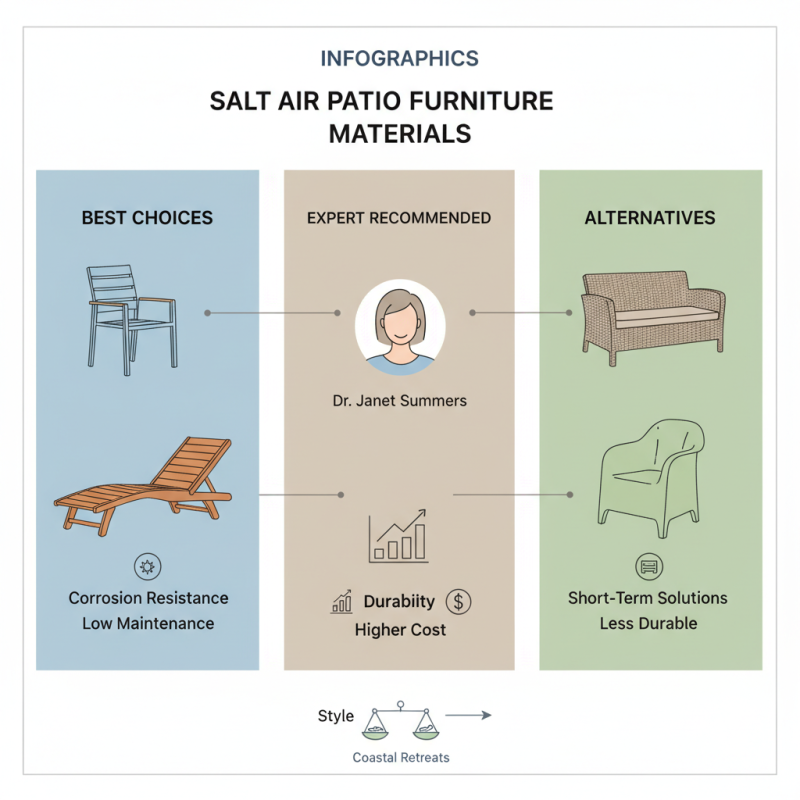
Choosing the right furniture for salt air environments can be challenging. Salt air can cause damage to outdoor furniture, leading to deterioration over time. As homeowners seek longevity, understanding "What is the best material for salt air patio furniture?" becomes essential. According to a report by the American Institute of Architects, materials should resist corrosion and require minimal maintenance for coastal climates.
Renowned expert in outdoor furnishings, Dr. Janet Summers, emphasizes, "Aluminum and teak are among the best choices for salt air exposure." Aluminum is lightweight, resistant to rust, and easy to clean. Teak, with its natural oils, provides durability against the elements. However, the costs can be higher, leading some to explore alternatives like synthetic wicker or resin.
While these materials may offer short-term solutions, they often lack the durability of metal or hardwood. It's crucial to evaluate both the aesthetic and functional aspects when investing in patio furniture. Considering the trade-offs between style and resilience could lead to better choices for your coastal retreat.
Understanding Salt Air and Its Effects on Patio Furniture
Salt air significantly impacts outdoor furniture. Its corrosive nature can lead to rust, fading, and deterioration. This is particularly relevant for patio furniture located near the ocean or in coastal climates. The combination of salt, humidity, and sunlight creates a harsh environment. Consequently, selecting the right materials is crucial for longevity.
Aluminum, teak, and marine-grade polymers stand out as viable options. Aluminum frames resist rust, offering a lightweight solution. Teak is naturally resistant to moisture and insects, making it a classic choice. Marine-grade polymers provide durability against salt and UV rays. However, even these materials require care. For example, regular cleaning is essential to remove salt deposits. Left unchecked, these can cause wear and reduce lifespan.
Investing in high-quality materials pays off in the long run. Yet, no material is completely impervious to the elements. Frequent maintenance ensures your furniture remains functional and visually appealing. Acknowledging the challenges of salt air will help in making informed choices for outdoor spaces.
Impact of Different Materials on Patio Furniture Durability in Salt Air Environments
Key Materials for Salt Air Resistance
When choosing patio furniture for salt air environments, material selection is crucial. Salt air can lead to corrosion and deterioration over time. Aluminum is a popular choice. It is lightweight, rust-resistant, and can endure harsh weather conditions. According to the Metal Construction Association, aluminum can last decades with minimal maintenance. This makes it an excellent option for coastal areas.
Another strong contender is synthetic resin wicker. This material mimics natural wicker while offering enhanced durability. It resists fading, cracking, and peeling. A report from the American Society for Testing and Materials highlights that synthetic wicker can withstand UV rays and salty air effectively. However, some lower-quality versions may not provide the same resilience. Buyers should look for high-density polyethylene (HDPE) options for lasting performance.
Teak wood is another traditional choice, praised for its natural oils that repel moisture and resist decay. However, the market is flooded with varying qualities of teak. It requires proper maintenance, such as regular oiling, to retain its beauty. This can be a chore for some. Experience shows that diligent owners enjoy its longevity, while neglect can lead to discoloration. Selecting the right material involves understanding these nuances.
Comparative Analysis of Common Patio Furniture Materials
When choosing patio furniture for salt air environments, material selection is crucial.
Aluminum is lightweight and rust-resistant. It can endure the harsh effects of salty air.
This makes it a popular choice for coastal areas.
However, not all aluminum furniture is created equal. Thinner pieces may dent easily.
It’s essential to inspect the construction quality.
Teak wood is another option. It has natural oils that resist moisture and salt.
Teak develops a beautiful silver patina over time, enhancing its appeal.
But it requires regular maintenance to prevent cracks. Without care, its beauty can fade.
Another drawback is its higher initial cost. Long-term value often outweighs this.
Plastic and resin furniture offer affordability and durability.
They are often UV-resistant and lightweight. This makes them easy to clean and move.
However, these materials can fade in sunlight.
They may also not provide the same aesthetic appeal as natural materials.
Customers often find themselves torn between durability and style.
Each material has strengths and weaknesses that deserve careful consideration.
Maintenance Tips for Salt Air Patio Furniture
When choosing patio furniture for salt air environments, maintenance becomes crucial. Salt air can deteriorate materials quickly. Regular upkeep can extend the lifespan of your furniture significantly.
One key tip is to clean your furniture regularly. Use a soft cloth and mild soap to wipe away salt and grime. Rinse thoroughly with fresh water to avoid residue buildup. For metal frames, be sure to check for rust frequently. It can sneak up on you if not monitored.
Another important consideration is proper storage during harsh weather. Bringing furniture indoors in extreme conditions can prevent damage. If indoor storage isn't an option, invest in high-quality covers. These can shield against salt, moisture, and UV damage. Even the best materials can fail if neglected. Don't overlook preventive measures for your outdoor investments. Regular checks and maintenance can save time and money in the long run.
Best Brands for Durable Salt Air Patio Furniture
When selecting durable patio furniture for salt air environments, choosing the right brands is crucial. Many manufacturers focus on creating furniture that withstands salt, moisture, and harsh weather. Look for brands that use high-quality materials such as teak and aluminum. These materials resist corrosion and decay. Teak is naturally oily, making it perfect for coastal climates. Aluminum furniture is lightweight yet strong, offering easy mobility.
In the realm of outdoor furniture, some brands are renowned for their robust designs. Their products often undergo rigorous testing against salt air exposure. This testing ensures longevity and reliability. Additionally, some brands focus on sustainability, using recycled materials in their products. This approach not only benefits the environment but also provides durable options for consumers.
While many brands claim to provide the best, it’s essential to do your homework. Check reviews and customer feedback. Look for specific mentions of how well the furniture holds up over time. It’s also valuable to visit showrooms and see the furniture in person. Handles, stitching, and the finish can reveal a lot. Investing in quality patio furniture pays off in the long run, even if it means spending a bit more upfront.
Best Material for Salt Air Patio Furniture to Buy? - Best Brands for Durable Salt Air Patio Furniture
| Material |
Durability |
Maintenance |
Rust Resistance |
Average Cost |
| Aluminum |
High |
Low |
Excellent |
$150 - $600 |
| Teak Wood |
Very High |
Moderate |
Good |
$300 - $1000 |
| Synthetic Rattan |
High |
Low |
Excellent |
$200 - $700 |
| Stainless Steel |
High |
Moderate |
Good |
$200 - $800 |
| Plastic |
Moderate |
Very Low |
Fair |
$50 - $200 |
FAQS
: Salt air can cause rust, fading, and deterioration of patio furniture, especially near the ocean.
Aluminum, teak, and marine-grade polymers are ideal due to their resistance to salt and moisture.
Aluminum does not rust and is lightweight, making it a practical choice for outdoor furniture.
Teak is naturally resistant to moisture and insects, making it very durable for coastal climates.
Regular cleaning is essential to remove salt deposits, which can cause wear and reduce lifespan.
Look for brands known for high-quality materials that resist corrosion and have good customer reviews.
Yes, some brands use recycled materials, ensuring both durability and environmental friendliness.
Investing in quality furniture usually ensures better longevity and performance over time.
Check for the quality of handles, stitching, and finish to gauge durability and craftsmanship.
No material is completely impervious, so regular maintenance is key to keeping furniture looking good.
Conclusion
When considering outdoor furniture for coastal areas, it’s essential to understand the corrosive effects of salt air on materials. Salt air can lead to rust, corrosion, and deterioration of furniture, making it crucial to select the right materials. What is the best material for salt air patio furniture? Key materials known for their resistance to salt air include aluminum, teak, and synthetic wicker, each offering different benefits in terms of durability and aesthetic appeal.
In a comparative analysis, aluminum is lightweight and resistant to rust, while teak provides natural weather resistance and a classic look. Synthetic wicker, made from high-density polyethylene, mimics the appearance of traditional wicker but is more durable against salt deterioration. Proper maintenance, such as regular cleaning and applying protective treatments, can also extend the life of patio furniture in salty environments. Choosing furniture from reputable brands known for their durability will ensure you enjoy your outdoor space for years to come.

 GIVANI Furniture